Direct line insurance rip off ?

In 2007 i switched my home (buildings) insurance to Direct Line for c £ 530 pa (a good £300+ saving on lloyds TSB). I was happy as larry.

On my return from hols yesterday find the annual renewal letter.It is automatic renewal naturally- insurance people understand all about the power of inertia and what the behavioural psychologists  (see nudge by thaler and sunstein) call default settings)

The price is , wait for it, £1489.30.

This is inflation of Weimar Republic type proportion of 280% over 4 years.

(when i call they offer to cut it to £800 or so)

All goes to show- the default settings trick is ok in the hands of those with your best interests at heart- such those getting you to save for a pension- but for Direct Line it was an opportunity to rip off a dozy consumer . That dozy consumer was me- i had let the price drift up each year and DL took the fact that i hadnt challenged the price as a chance to hit me with a truly rip off price in 2011.

Meanwhile my car insurance with Admiral has gone down-i had made no claims on either car or buildings insurance during that time. Pick the bones out of that.

is this what the big society might mean ?

A partnership between brands and local government?

Brands have money. They want to be seen as trusted and rooted in the lives of their buyers,especially as this is a time when ‘glossy’ doesnt play in the west ( it does in China right now) and people are anxious and hunkering down

Local government has very little money and need investment for regeneration.

They also  touch many aspects of people’s lives and communities

These are the ingredients for a partnership and a continuing story that can be shared by the brand and the local community

A great example here  from the US and Levis and the town of Braddock

Any dangers? Yes – all urban regeneration takes time so once started the brand has to stay committed or face accusations that a brands is doing it all just for publicity rather than as an expression of heartfelt values.

The underused art of visual storytelling in advertising #advertising#storytelling

There is not much of it about these days in adland-perhaps that is why we still remember the rare exceptions like The Man with the Hathaway Shirt-why the eyepatch/what is his story?It is no accident that he is older as old people have more stories to tell, more history. Modern advertisers often shy aware from this kind of distinctiveness ( or it gets knocked out in research) preferring instead bland,young looking, generalised images- most corporate websites look like they have been assembled from a youth imagery picture library. Perhaps more distinctive imagery should be commissioned that tell a story. Perhaps older people with character in their faces.

In great storytelling, not all is told. There are gaps for us to imagine and participate in its completion and interpretation. The story is implicit, which literally means that we have to play a role in unfolding the story.

And in advertising that makes for a more memorable experience that one in which all is explained.It is the small yet distinctive details that set us wondering.

But this does necessarily means we need more wrinklies in the ads. From the art world (where adland frequently looks for inspiration) Cindy Sherman is brilliant at conjuring up narratives from pictures like this one- an early example of her work. Where is this girl from ? where is she going to? Is she fleeing from and unhappy love affair or escaping and life of privation to find something better? She stands away from her case,which is small- has she been waiting a long time? is the person she is waiting for failing to shoe up? Is it just a weekend away or is she leaving forever with what few possessions she has?

We are drawn into the story to provide own own ideas that will themselves be mediated through our own experience.

Early Cindy Sherman

Story-telling is like improv’ comedy in social media #socialmediainfluence#storytelling

Storytelling was a hot topic at Social Media Influence 2011- but this is not the neat finely honed story-telling as we know it. You know what I mean- one author carefully crafting a tale with a beginning a middle and an end.

No, this is much more like improvised comedy – it can start anywhere and you don’t know quite where it will end up. Steve Frost or Paul Merton are masters of this art- a topic is mentioned (an animal, a person, an historical figure, a sound, a mood) and off its goes passing in a chain from one to another taking unpredictable twists and turns, until it runs out of steam.

This insight (from Andy Whitlock of Poke) points up both the joy and weakness of this freeform multi- authored form of storytelling.

It can be fresh and take unpredictable, surprising directions but it can also end up being (well) a bit tedious and time consuming- an activity for those with plenty of time on their hands. There is only so much “co-creation” that the average person can find the time for.

No surprise then that the counter-trend is also true- we still love traditional advertising storytelling in social media. I mean by this those beautifully crafted little dramas in 30 or 40 or 60 or even 90 seconds featuring characters- human, animal and plasticine- that made British advertising the most famous in the world in the 1980s and 1990s.

Its is unfashionable to say so but these are still very powerful -no wonder that John Lewis and VW have been so successful with them in the past 12 months. They could have been made 15 or 20 years ago.

Andy Whitlock also makes the point that a big part of the great success of the Old Spice campaign is not just the clever use of twitter to improvise the campaign direction by talking back to tweets but also the fact that each ad uses traditional advertising craft skills- pitch perfect comedy scripts, casting and direction.

Children’s book sales are up perhaps the internet is not rewiring our minds after all

Last year a new book- the Shallows by Nicholas Carr- suggested that the internet and new devices are “rewiring” of our brains and creating a new generation with the attention span of a knat- unable to concentrate without clicking away to something else. Certainly you have to get to the point quicker these days ( most videos on youtube last less that 3 mins) but that may be more to do with being busy, our perceived shortage of time and the explosion of choice

And then there is this this from The bookseller…

“Although overall book sales fell 2.2% week-on-week (to £25.1m), spending on children’s books soared nine percent week-on-week, according to Nielsen BookScan Top 5,000 data, as schools broke for half-term. Children’s authors benefitting include Jeff Kinney, whose Diary of a Wimpy Kid series enjoyed a 20% uplift week-on-week, Rick Riordan (total sales up 9%), Jacqueline Wilson (up 17%), Anthony Horowitz (up 12%), Darren Shan (up 26%), and Octonauts author “Meomi” (up 7%)

It seems that the next generation still love to immerse themselves in good old fashioned stories and that the answer to Nicholas Carr’s question “Does Google Make us stupid ?” is probably not – it just gives is more rapid access to books and other stuff we want.

Why big companies don’t know what to do about social media

and what they should about it. In this article, shortly to be published in Directory, Julian Saunders explains that social media radically challenge the way companies are organised around “selling to target audiences” rather than listening and responding.

Why the AV referendum was doomed-explained by behavioural psychology

Here is a perceptive comment on why the AV referendum was doomed to fail using insights from Behavioural Psychology by research agency Monkey See:-

“the wording of the AV referendum question used would appeal to voters’ instincts to follow the status quo there can be little doubt. It kicks of with the unequivocal message, “At present, the UK uses the ‘first past the post system’ to elect MPs to the House of Commons.”

Research was conducted by Define Research & Insight for the Electoral Commission to check the clarity and neutrality of the referendum question. And bizarrely, given the findings from behavioural science outlined above, the wording of the question used was chosen precisely because it supported the status quo.

“The first sentence helped people to understand the status quo”, reported Define Research in a document prepared for the Electoral Commission.

It is also interesting to note that the question the Electoral Commission went with was not the first option it considered. The first option considered was worded:

“Do you want the United Kingdom to adopt the ‘alternative vote’ system instead of the current ‘first past the post’ system for electing Members of Parliament to the House of Common?”

Although this formulation also makes clear which voting system we have at the moment, it has nothing like as strong or prominent an emphasis on the all-important status quo.

For research aficionados, it’s also worth noting that Define asked respondents directly if they thought the original question was neutral. Their report says that most thought it was but a few picked holes – what you would expect as they were asked to do so.

The irony is that this direct questioning (often likely to mislead) almost certainly resulted in a less neutral question being used at the end of the day”

How a story helps a little brand to charge a big price

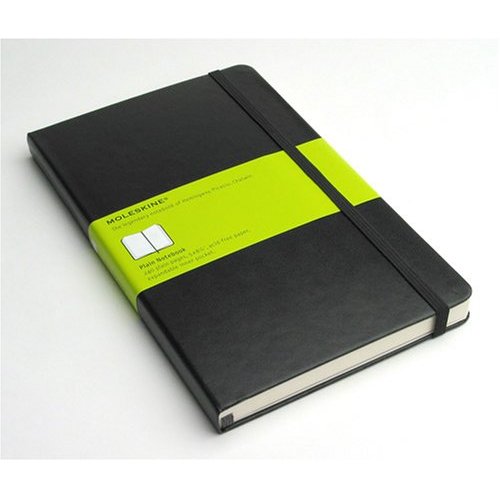
I find myself wondering why I have just paid an unreasonable amount of money for a simple notebook- Moleskin to be precise. Then a little slip of paper falls out of the notebook book as I open it where learn that great artists and thinkers have used it for two centuries.Bruce Chatwin – a mythmaker if ever there was one-loved them and stocked up on them when it look as though they would no longer be made.

A basic thing made precious

It’s the notebook of travelers and adventurers I am told. It travels the globe.

Do I believe the Moleskin story? Not quite. Do I want to believe it?

Yes-as I make my rather mundane notes about a workshop I am due to run I can imagine that I am communing with the shades of some of very best creative artists

Am I prepared to pay X3 the amount for the equivalent WH Smith notebook?

Yes. Do I feel like a bit of an idiot for doing it? Well a bit. But not that unhappy. I have been dawn in a suckered with a bit of charming myth making

It all goes to shown how a romantic story can elevate something as low-tech as a simple bound notebook. Cost of marketing-a little slip inside each booklet in five languages. Not a bad ROI

Humanity,charm and storytelling still win the day in digital media

VW’s new ad for the Passat is also a much shared viral.

It is the story of a boy who thinks he is Darth Vader and tries unsuccessfully to use his special powers until, that is. till his dad comes home in the Passat and sudden his powers seem to work…..

A simple human story about how boys play told with wit and charm..

Perhaps some of the most old-fashioned ways of marketing are still the best

Storytelling is how all the worlds major religions were spread..