
Spotted in Vienna this week as I walked from my hotel to a restaurant.
This a perfect example of visual storytelling with a clear promise
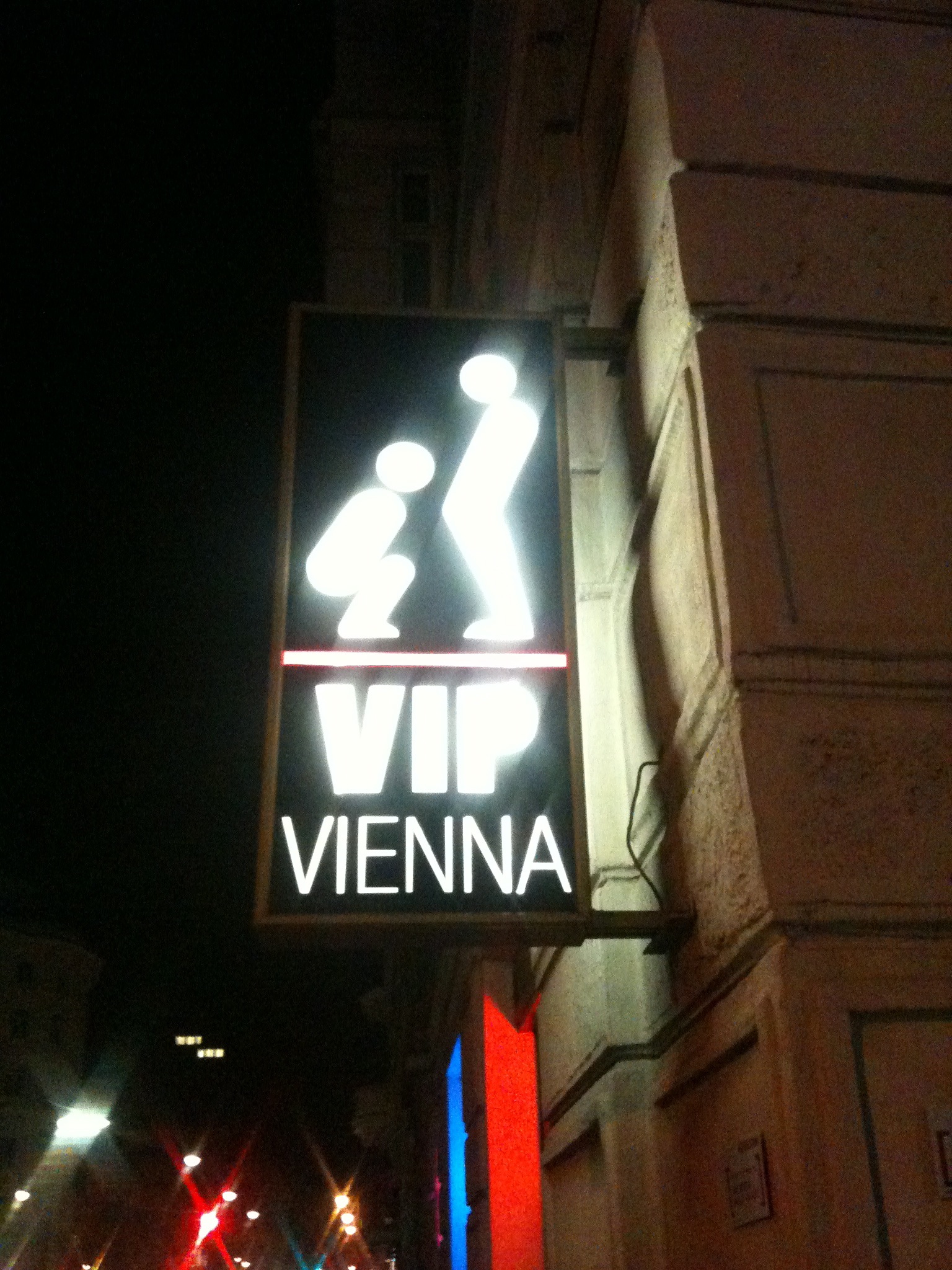
Spotted in Vienna this week as I walked from my hotel to a restaurant.
This a perfect example of visual storytelling with a clear promise
When i started in advertising we rarely had brainstorms- a brief was written and handed over to a creative team to come up with “the idea”. Now agencies have them on an almost daily basis. The reasons?
-Social: a larger team needs to be enlisted to execute a campaign and you need to get more people committed to an idea to execute it well
– the nature of ideas: no longer a finely honed message these days but often the starting point for conversation and interaction. And a belief that ” the idea can come from anywhere”
Quite a lot of people harbour a secret dread of “The Brainstorm”- and many of them are badly run which wastes a lot of peoples’ time. How to use them better? My 12 top tips are
-Don’t have too many Brainstorms and invest those that you do with greater significance
-Define a clear problem to be solved. Use an active verb to define it as in
“Win new customers”,”Change the image of the brand”,”Deliver better service”
-If the problem is not clear have a separate session to sort it out-otherwise the first part of the brainstorm will be lost in debate
-Separate the “problem owner” and the brainstorm facilitator- don’t try to be both
– Don’t try a Brainstorm in under 90 mins
– Have a warm up at the start just as you would before playing sport ( most people have left brained jobs and you need to get the whole of your brain moving) eg; Draw your own logo/tell us something exciting that happened to you recently etc
( I have lots of these just ask)
– it is a good idea to get attendees to do some prep to get in the mood but keep it simple and give only one task or it wont get done
-Get a diverse group of people together
-Make sure that people are prepared to play the game and that hierarchy will not be a problem ( I once had disaster in Italy because ” the boss’ showed up so everyone sat and listened to him)
– Run the Brainstorm in a light and airy room
-Have regular breaks every 90 minutes at least
Telenor’s bold move that deserves support

A striking and different campaign has hit the streets and airwaves of Pakistan from Telecoms giant Telenor. The company is putting a lot of money behind it on TV and in posters (and is one of the highest spending advertisers in the country-they spend more than Unilever and P&G combined.).
When I drove from the airport to the hotel in Karachi it was the poster that really stood out as different from the happy smiling faces of the other big spending brands on the drive into the city. It was the same in Islamabad , where all the government offices are. A large (96 sheet) poster was right outside the airport-Pakistani politicians cannot fail to see it in their back yard.
Kamoshi Ka Boycott means ‘end the silence’ (that can further be elaborated as ‘and raise your voice’) is an invitation to the youth of Pakistan to speak out and text in on the issues that really matter to them-(the ads are branded DJuice-which is Telenor’s pre paid mobile tariff aimed at the young)
Perfect timing
Telenor’s timing is near perfect- partly planned, partly luck.
The luck bit is that this campaign was being developed before the current wave of change in the Middle East and North Africa but it chimes perfectly with it.
The planned bit is that this campaign coincides with the cricket world cup in a cricket mad nation. Kamoshi Ka Boycott TV commercials appear in the breaks of the cricket shows that cover the exploits of Shaid Afridi and his dashing band of teammates. While other brands are doing light-hearted promotions around the cricket world cup, Telenor has broken with convention and created a platform for people to raise the serious issues
Telenor are in a long tradition of telecoms companies who use communications to bring about a change in the culture and not just sign up customers. It really started with The Future is bright the Future is Orange in the mid 80s in the UK. Yet Telenor’s campaign is and looks altogether more visceral and immediate than that- it has an energy and an immediacy that is needed to start movements and is in the best traditions of political posters rather than brand ads
Will it catch fire?
Telenor has committed a big ad spend and it has helped to put low cost mobiles in the hands of young Pakistanis so they can communicate their issues cheaply with a text-which is what the first part of the campaign invites them to do.
That of course will be a story in its own right- what will young Pakistanis text in? – a report back on that is worth covering in the media (at home and abroad given the context of the times).
Yet Telenor still need a bit more luck- they need personalities to get behind it-(step forward Shaid Afridi ?)-and they need to tap into a vein of discontent and desire for change. The results as we have seen in North Africa can be unpredictable.
“All that is necessary for the triumph of evil is that good men do nothing.” (Edmund Burke)
These are especially difficult times for politics in Pakistan
Two progressive politicians, who stood against the blasphemy laws, have been gunned down by the Taliban.This is meant to silence moderate opinion and tolerant people and it must have an effect-to speak out in Pakistan you do not just have to be good but very brave. Few individuals are prepared to pay with their lives as Shahbaz Bhatti and Salmann Taseer did. Perhaps a force for change is not to rely on a few brave individuals but to engender a mass movement of young open minded people- this is what has brought about a transformation in Tunisia and Egypt.
It is early days in the campaign-what will happen next?
Karl Gerth’s new new book gives us a lot of of insight into why brands and branding are rising up the agenda in China in both government and business circles ( in reality that is one and the same thing). Quotes from the book and my comments…
“Chinese exports have low added value meaning that the real value is not collected by China-…for example a 30 gig ipod has an export value of $150 but the added value collected by Chinese labour amounts to only $4”
“in 1980 the Chinese govt received 20,000 trademark applications, a number that by 1993 had reached 132,000…more than 80 % of trademark applications have been made by Chinese companies”
“Building or buying brands is considered a matter of national economic security and , of course, of national pride-China wants its own international brands to reflect its success and its status as a first rate power.”
The problem is that Chinese consumers do not have much faith in their indigenous brands for good reason-scandals have hit the reputation of manufacturers for cutting corners on quality and safety. It is the by product of a culture that produces so many fakes- people cannot be sure that they are buying the real thing and so they cannot be certain of consistency and reliability. Relability and consistency is the bedrock of any brand – without it you have nothing to build on
Result: Chinese brands are weak and the government tries to support them …….
” in the summer of 2008 even incorporated the establishment protection and management of national brands into its national strategy”
If the quality is not perceived as being good then government can put its guarantee behind the brands…”Chinas watch dog for product quality set up a “China brand name strategy promotion commission” and awarded 57 brands the title of China top brand”
This is to some extent an admission of weakness- else where in the world a company puts its good name on the line through branding here the Chinese government is doing it-effectively underwriting brands with the party’s guarantee.
“the ministry of commerce had set ambitious targets that include developing one hundred restaurant brands,fifty hotel brands and prominent brands in the beauty industry”
” the biggest hurdle to Chinese brand development is the fact that China often resembles a collection of diverse markets rather than a single integrated one..ther are 400 brands of cigarette where 60 % of men smoke”
“in the 1990s Tsingtao Brewery successfully built and national network by acquiring 22 local breweries.”
As Gerth says… “If you cant build them buy them” The fate of IBMs thinkpad (bought by S.O.E. Lenovo in 2004) points the way to the immediate future…..2011 will see more brands bought by Chinese companies
Is the title of an excellent new book by Karl Gerth
We tend to look west for new consumer markets – think Apple’s IPad and Botox- and that is unlikely to change any time soon
But now we need to look east as the needs of China shapes innovation and pricing. Things will be greener and cheaper because those are both imperatives for Chinese ( government &) consumers.
The book is full of compelling stats and oberservations that show that link between uncontrollable consumer demand in China and its political consequences
China is rapidly developing a car culture-( that most strategically important of industries)
“Car production has become the employer of 2 million people in China and an important engine of economic growth”
“The desire for cars here is as strong as in America but here the desire was repressed for half a century” (Li Anding)
“Cars spew 36 hundred tons of pollutants into Beijing’s air every day making it one of the most polluted cities on earth with air pollution 5 or 6 times the WHO’s safety standard”
“China accounts for for roughly 12% of the worlds demand for energy and its consumption is growing at 4 times the global rate”
“6 % of its oil comes from Sudan and accounts for 60% of that countries exports”
“Poor people around the world are paying more for food because of cars….crops to produce biofuels……millions of acres of cropland for roads and parking lots”
“Chinese manufacturers are are racing with other world car manufacturers to produce electrics low carbon emitting cars”
The world needs to ask of China what it has consistently failed to do itself-embrace cars without producing negative consequences”
The answer will obviously be more electric cars and the imperatives of longer battery life ( not yet achieved) will dictate aesthetics as form inevitably follows function. We will have to learn to fall in love with snub nosed cars

More follows on this book in later posts
Depression is the leading cause of suicide in New Zealand. The Ministry of Health have created a website , fronted by Rugby Legend John Kirwan (himself a sufferer), to mentor people through the process of recovery one step at a time.
Comment
It is a great example of how a website can both put people in control and manage to be quite personal and intimate at the same time. It has some traditional strengths too- academic depth and fronted by a well known personality- as well as making good use of the mobile as a prompting/nudging tool.
The idea is– The Journal
A self management program with over 50 minutes of video footage guiding people through the six stages of recovery.
At each step, mental health experts explain the theory behind each of the tasks that the people who had registered are asked to perform.
A planning tool allows people to set their own pace-personalised texts and emails remind people of what they were meant to be doing. Keeping them on track.
Results
Directory magazine reports the following results
76,000 visits to the site during first six weeks after launch
4,485 signed up for The Journal, by comparison c 700 people present to GPs during the same period.
Average of 12.45 minutes per lesson visit
Average of 90 minutes over the six stages
By adapting the industry standard PHQ9 test into The Journal the team were able to compare with against traditional treatment with medication. 83% of people completing The Journal improved their scores by more than 25% on average going from ‘moderately severe’ to ‘mild’ levels of depression
This report is courtesy of Directory
To the RSA to hear about Polly Toynbee and David Walker’s Verdict on New Labour
The defenses offered by Douglas Alexander and Jack Straw were interesting because the most persuasive bits (from a communications effectiveness point of view) where when they talked about the visible symbols of change in their constituencies and in particular new school and hospital buildings. As a recent user of a brand spanking new London Teaching Hospital this had the ring of truth for me. New housing though was not cited and New Labour’s record was heavily criticised from the floor. (French leaders have always understood the power of visible symbols with their “grand projets” – The Pompidou centre/Arc de Triomphe/Eiffel tower/IM Pei’s glass pyramid).
It does raise a question as to what visible symbols The Conservative will be associated with? It matters as we tend to judge a government by what we see immediately around us. At the moment it is empty shops-some of them filled by pop up art. But Boris Johnston may offer a clue with visible symbols of the greening of London through the likes of Boris Bikes. A visible success for both Boris and Barclays. How much further can this go- proper cycle lanes /more electric scooters ( an electric scooter cost only £200 in china so cheap ones can surely come here)more electric cars/solar panels that look designed into the environment rather than stuck on.
Ken Livingstone’s visible symbols were Congestion Charging Zones and the excellent and life enhancing transformation of the South Bank of the Thames as a place to perambulate,eat and enjoy metropolitan culture. The Dome is sufficiently out of the centre for us to have forgotten it as a symbol of New Labour and it has anyway been rescued and turned into an asset of the London entertainment scene by O2.It is too early to tell with the Olympic park.It is a “grand projet” in the French Tradition but will it turn out to be a white elephant? Too early to tell.
The worry for The Conservatives is that the grim language of cuts with be ever more manifest in the physical world.
Perhaps the key communications issue for the conservatives is how will The Big Society be expressed in a way that we can both experience it and see it.? Perhaps like Boris’s bikes and The Emirates this visible future will be sponsored.
To the RSA to hear about Polly Toynbee and David Walker’s Verdict on New Labour
The defenses offered by Douglas Alexander and Jack Straw were interesting because the most persuasive bits (from a communications effectiveness point of view) where when they talked about the visible symbols of change in their constituencies and in particular new school and hospital buildings. As a recent user of a brand spanking new London Teaching Hospital this had the ring of truth for me. New housing though was not cited and New Labour’s record was heavily criticised from the floor. (French leaders have always understood the power of visible symbols with their “grand projets” – The Pompidou centre/Arc de Triomphe/Eiffel tower/IM Pei’s glass pyramid).
It does raise a question as to what visible symbols The Conservative will be associated with? It matters as we tend to judge a government by what we see immediately around us. At the moment it is empty shops-some of them filled by pop up art. But Boris Johnston may offer a clue with visible symbols of the greening of London through the likes of Boris Bikes. A visible success for both Boris and Barclays. How much further can this go- proper cycle lanes /more electric scooters ( an electric scooter cost only £200 in china so cheap ones can surely come here)more electric cars/solar panels that look designed into the environment rather than stuck on.
Ken Livingstone’s visible symbols were Congestion Charging Zones and the excellent and life enhancing transformation of the South Bank of the Thames as a place to perambulate,eat and enjoy metropolitan culture. The Dome is sufficiently out of the centre for us to have forgotten it as a symbol of New Labour and it has anyway been rescued and turned into an asset of the London entertainment scene by O2.It is too early to tell with the Olympic park.It is a “grand projet” in the French Tradition but will it turn out to be a white elephant? Too early to tell.
The worry for The Conservatives is that the grim language of cuts with be ever more manifest in the physical world.
Perhaps the key communications issue for the conservatives is how will The Big Society be expressed in a way that we can both experience it and see it.? Perhaps like Boris’s bikes and The Emirates this visible future will be sponsored.
Fascinating at how modern Gauguin was in creating a myth of his own life as a marketing tool. He really understood the concept of “success de scandale” and doubtless was able to keep himself the talk of Paris with his rackety lifestyle and seduction of young women. Damian Hirst could have studied at his feet when it came to a talent for publicity.
This idea of life as carefully constructed myth was carried through into his art- he was in way a classical painter in his suggestions of narrative and backstory in many of his paintings. However his narratives were more allusive than classical art, which traded in a shared culture of commonly understood symbols. People knew how to read classical art. Gauguin however is about much more than narrative painting- His lush and erotically charged pictures are glorious and heady escapism in which you can wallow and day dream
The audio commentary at the tate was good but i sensed that the people who produced it didnt really approve of Gauguin and felt the need for some political correctness over his seduction of young women and publicity seeking. There was one absolutely desperate attempt at a feminist critique that i sensed the commentator didnt really believe in herself
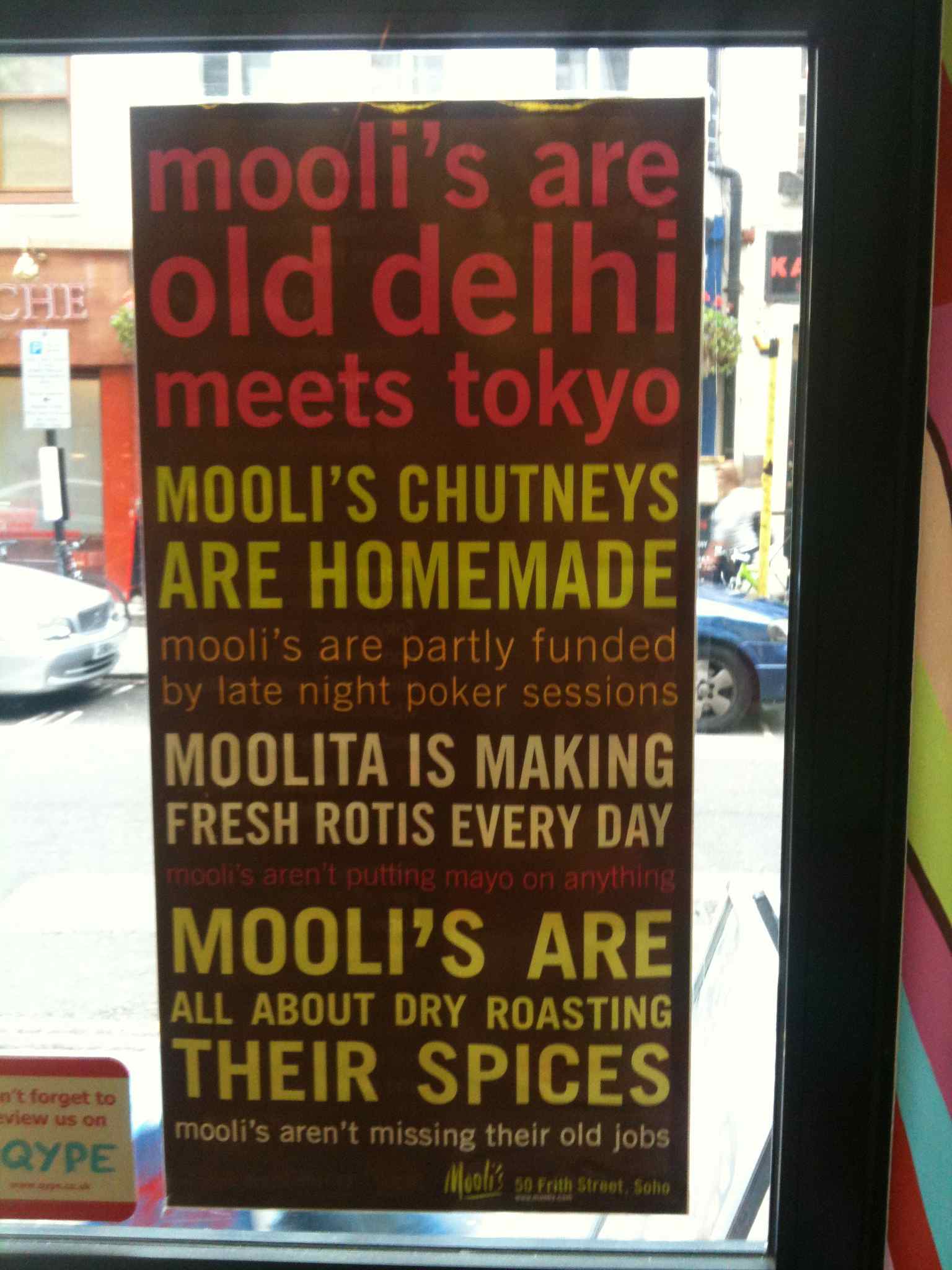
Intriguing back stories are essential in new product launches – or least launches with the kind of personality that gives you a sense of the people behind the brand. I think it is because there is so many new products and services we increasingly look for affinity and identification to give what we buy extra meaning.It is a case of- Like the people, intrigued by their story, feel affinity with the brand. Moolis was founded we learn on late night poker sessions and clas ohlson is proudly swedish
 joinedupthink