What women really want

I was just going through old VHSs and doing a clear out when i came across this- me on the tele with Gabby Roslin on The Big Breakfast (Chris Evans had just left the show) talking about what women want.Gabby reduced it all to one word – sex.

My attempts to suggest otherwise were fruitless

How did come about ? Well i was doing a study about advertising and women at Ogilvy with Sarah Newman, Beth Barry and Sarah Palmer (of Big Green Door)- I learnt a lot from them. Beth placed a story about it in The FT and the researchers at The Big Breakfast picked it up. Would Beth go on and talk about it, they asked ? Beth didn’t fancy it nor did Sarah so i was deputised.

I was given just 30 seconds to summerize a big and detailed study…

Happy days-and happy memories of working with some very talented people

My favourite campaign this year is..

Here is my Favourite campaign of the year

Courtesy of a Canadian Beer called James Ready

Everything is good about this-low cost,interactive and makes you feel good about the people who make the beer.

There is a clear brand positioning and a creative idea that can run and run

It seems that local and community based is definitely  a trend- see also the Braddock Campaign for Levi’s workswear-

which I think is linked to “hunkering down” and economic uncertainty

Is viral marketing mainly a waste of time? #IWE

Short answer- most of the time yes

These thoughts occur to me at the Internet week Europe conference looking for insights…a few nuggets

What works in viral video?

We learn tt has to be one of three things

-Funny

-Awesome

-Schadenfreude

Which seemed like a good checklist. I would add to this that sometimes a beautifully told story does the trick and the past masters of doing this in a compressed form are still the ad agencies. See my earlier post on this picking out John Lewis and VW

The long shot problem

Another “fact” that popped out was that only one in two thousand videos that is intended to go viral does so. Now this is no way to plan for a serious brand. It makes marketing a long shot. People start quoting William Goldman on filmmaking-who famously said ” Nobody knows anything”. Not an enticing prospect if you are marketing director Imagine that conversation with your MD

You-“We are going to make a great viral?”

MD-“how successful will it be?”

You-“Dunno. It is a long shot. As William Goldman said…etc etc”

MD-“Um I think you need to find something a bit more substantial. What about a TV ad?”

And before your lip curls at antediluvian attitudes of the boss it is worth remembering that the TV as is alive and well and has not been killed. For all its viral properties The Old spice campaign was also first a TV ad. It kicks things off before becoming a) interactive and b) episodic (which are two further tips on how to have a success in online video.) But the big problem with the Old Spice campaign-for all its cleverness and creativity- is really that it’s the rare exception.It is the 1 in 2000 shot that you only bet on if you are also spending budget on other things

So what did happen to the TV ad, then?

About 10 years ago doomsayers started to predict the demise of the TV ad-a combination of the internet then the broadband internet then PVRs ( like Sky+) and later Video on Demand (VOD) would mean audience fragmention, ad skipping and time shifting- a killer combination. So the doomsayers said. Now it hasn’t quite worked out like-much of the initial research with early adopters was not a good predictor of future mass behaviour. Yet most of the trend presentations that marketing people were seeing told them that they needed to prepare for the demise of their favourite and most expensive marketing tool- The TV commercial- and at the very least test alternative approaches. It was an important stimulus to innovation. As Doctor Johnston once said – The prospect of being hanged concentrates the mind wonderfully.

So where are we now ten years on

Thinkbox has led an effective fightback and on behalf of the channels and the TV ad.

Try this little experiment.Turn to the back your newspaper.( the free one that you got on the way home) Notice something familiar that we were told would be gone by now? The TV schedules. Don’t they look comforting and familiar?-It is a little map of how i might spent my evening in the company of my wife and children. Sure, we will be fighting over the remote but we will be watching the box together.If you are in the business of predicting technology futures best to hang on to simple human desires-for habit, for company,for relaxation and letting your mind idle in neutral.That’s me anyway. I am getting on a bit though .But wait. This is not just because i am a dinosaur-and don’t you just love all those new program about dinos-the young love live TV too..

The Joy of live 

Turns out that the digital revolution threw in another curved ball. Watching live telly became a lot more fun as a result of mobiles and social networks. We can tweet and IM to our hearts content-sharing the experience not just with our families in the same room but also our wider networks of friends wherever they are. Who would have thought it-not the Doomsayers of 10 years ago


Brand partnerships with bands are getting more sophisticated

Things have come a long way since a rock band simply performed a gig in front of a logo and their manager saw the brand owner as merely an open cheque-book.

One reason is a group has formed (Brands and Bands) that brings together all the different parties to share success stories and best practice. Another is brand owner and band managers are getting more knowledgeable about how to set up things in the right way and manage relationships. There are also specialist agencies in the field. Here are some top tips

-Set it up as partnership and start early on this. Share objectives and work out how the brand and the band can use their assets ( eg sales channels on the brand side/exclusive access on the band side) to mutual benefit.

See this as a business partnership deal rather than a sponsorship. ( this is probably the most important lesson)

-For brand owners Set up a music platform that is bigger than any individual band

A good example is Guinness Arthur’s day which involved 60 bands playing live in four Irish cities on one night.

Another is Smirnoff’s nightlife exchange project-which is now being give a massive boast by involving Madonna.

The key point being that the platform pre dates Madonna (and will carry on after Madonna is no longer a part of it)

There is an opportunity for brands to support emerging talent. This is more of a risk/more entrepreneurial but on the other hand it can be surprisingly inexpensive and very fruitful with strong mutual commitment in the long term. It can also be very good for brands wishing to keep their street cred fresh and current

The watch words are Authenticity and credibility– Consumers can smell a cynical relationship between a band and a brand just based around money. So there needs to a true story told about the relationship.

Bands have to commit to it.If you are sponsored by Puma you can’t go on stage wearing Addidas

Why this is set to grow.

1) Brand owners have the money and the bands do not, so bands are becoming much more business and brand aware and comfortable with it- it is no longer a sell out to commercial interests. How things have changed. Can you imagine The Clash or The Jam or The Sex pistols being up for this.

2) Brand owners want different kinds of creative ideas. It is not longer about pushing ad messages down channels but creating activity that people want to be a part of and share. Brand owners now use many platforms and need what MEC call Liquid Content. There are few more forms of content more liquid and shareable than Music.


What publishers can learn from porn #edbookfest

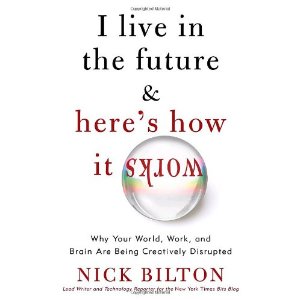
Nick Biltons newish book ( which I have as an eBook)  sets out to study what we can learn from the porn industry (among other things)

His reason? The industry always been innovative and adaptable (premium phone lives and web chats got an early boost from porn)and so they might act as a testing ground for revenue generating techniques.

He notes that the industry, like others affected by the digital revolution, has seen revenues hit hard by amateurs posting stuff/free websites and piracy. But some are innovating their way out of a corner

Some quotes

There’s one other thing I discovered the next-generation consumer will pay for online: better experiences, which often grow out of better storytelling.

 Once visitors engaged in conversations on the porn sites, many of them no longer felt comfortable stealing and sharing the work of people who were trying to make a living. They simply saw them in a different light. Personal stories add one dimension, but great storytelling on the screen or the page consistently stands out.

 The next generation of porn and storytelling will be hyperpersonalized, placing you almost directly in the scene. That will give you control over what you see—almost like you’re standing on a holodeck, a room that uses holographs to simulate reality.

What can writers and publishers take from this?

 Personal connection reduces piracy. Makes sense- we are less likely to steal from those we know or have some kind of relationship. So authors should combine events and online to create personal connection with readers many authors hate this feeling it gets in the way of the work, especially the more literary types. But if you want to succeed you have to engage

 Live reduces piracy The pirates don’t have time to pirate and the personal connection reduces the desire to steal. Hence the appeal of serialization- back to the future then

People pay more for quality production. The current eBook on amazon is a bog standard low cost production.Care, love and innovation will add value to ebooks. People will pay for a treat or a pleasureable experience- My eBook are only convenient and functional. Don’t believe people who tell you that is all they want.

Niche Marketing. The other thing that porn teaches us is the value of niche marketing-and I mean niches of niches here. Nick Bilton, being an American cannot quite cast off the mask of political correctness in order to get stuck in and analyse the porn industry’s niche marketing strategies. ( His wife – he makes sure to tell us – knew what he was up to and vetoed him meeting porn stars.)I hankered for a German or Scandinavian writer at this point who would cast a cool ,considered and unembarrassed eye over the industries innovation in niche marketing.

Definitely worth a read- only available in hardback in UK at the mo so better go for the eBook

How much can authors charge for eBooks? #edbookfest

The Guardian/Edinburgh Book Festival debate about the future of books (in the age of Kindle) garnered over 200 posts on the Guardian website- thanks mainly to an excellent and provocative piece byEwan Morrison.

One big question left hanging is how much can authors charge for an eBook? Most authors are too busy to think about “pricing strategy” so here are some thoughts-

This is one of those important but boring topics as it can be the difference between having a livelihood or not-

How much can you charge for ebooks?

In theory at least it should be possible to hold up the pricing on eBooks and avoid a race to the bottom. By this I mean not charging 99 p but several pounds for a new book. Just what the price elasticity is on a new book is unclear and the waters are being muddied by Amazon (See why below)-It may not be the price of a new paperback but nor should it be the price of a download from Itunes. It is somewhere in the middle- and the extra cash and margin make all the difference (Especially as explained in earlier post Amazon are offering good terms to those who publish with them-Publishers hate this but it could be good for authors. In theory they could charge less and make more)

I know that sounds odd but bear with this

Every book is a unique product. If I want a William Boyd novel (just to take an example) I want a particular book. I don’t want something like it. I like his work, his way of plotting and writing. I don’t want someone else. I want the new Boyd. Boyd may decide not to charge as much for an e-book as for a paperback but as there is less cost in a digital file than in a printed book (cheaper to make and distribute) he should in be able to make as much margin or even more and still charge a reasonable price. A price that is good enough value not to invite mass piracy

Note on piracy. Global studies show that the levels vary enormously around the world- very high in emerging economies but relatively low in the USA-the country which ironically brought us Napster and so had a hand in promoting piracy as something that was not a crime but that people felt was their right. Anyway back to the plot

Boyd can set the price- and may have more control over the price that if he sold through Tesco or Waterstone- who have for some time discounted heavily to compete with each other

So far so good.

But why does is not working in practice right now?

Several reasons

A) Who controls the cash register?

The likes of Amazon control the cash register. In fact whoever controls the cash register whether it is Tesco or Waterstone or Amazon is in a strong position to set prices. They also compete with each other so it is not just a question of driving down supplier prices but also being competitive with each other-they don’t like to be undercut.

 B) The short term pricing tactics of Amazon

Amazon is buying market share with a cheap device (The Kindle) and cheap eBooks. Recession is a good time to buy market share and they are trying to establish themselves as the eBook seller with scale and reach (soon opening in India). There is little hope for out of copyright authors which are being pushed out very cheap or free to get people into the Kindle habit-so cheap in fact that most people will not bother with piracy. Once you have the complete works of Jane Austin for less that £1 or nothing there is no way back.

Having said that as the market grows it will segment. Take the Jane Austin example. There will be some opportunity for a deluxe added value eBook- including (say)pictures of Jane and her times /contemporary reviews etc-in future (full colour) kindles and other e-book readers. This may add a bit of value-and there will be a market for people who want a more visual pleasure, more care and extra interest than the bog standard e-books (that Amazon currently pushes out for out of copyright authors.) Although it must be said ROI will be an issue- if you spend a lot on developing such a deluxe version you need to be careful that it can be priced in such a way as to make your money back

What hope is there?

A) Amazon in the longer term

Amazon is a retailer and so, unlike Google, does not really want to be providing free things. Google doesn’t care if it gives the world away for free as long as you use their service and they can therefore sell advertising. Amazon will want to publish and sell products that are valued and not commoditised. Once it has secured its dominant position it will want to trade up. Remember Tesco under Jack Cohen used to pile it high and sell it cheap- now it Tesco’s sell Tesco’s finest and all manner of premium brands.

 B) Authors develop their own followings

The digital revolution is not just something that has made the likes of Google and Amazon uber-rich. It has also put control in the hands of authors. Authors can connect directly with readers using any number of free and low cost platforms (Or they can hire people to help them do this. It is time consuming after all)

With a bit more money you can do a JK Rowling – and take complete control as she is planning with Pottermore. She is not just doing this because she is rich. Communicating and selling on digital platforms is much cheaper than before and is coming down in price all the time and she wants to keep control of her creation not just see eBooks knocked out at 99 p and knocked off by pirates.

Once you have a following- what marketing types call brand loyalty-you are in a position to set prices.

I expect a new generation of writers who know about social media ( and enjoy its potential for connection) to emerge and do well- they have a power to reach their readers that the previous generation did not have. Amanda Hocking is much cited and John Locke has secured a book-publishing contract through self publishing with S&S.

Readers like to follow the authors they like. They are interested in their lives, influences and how they work. Go to any book fair and you will hear authors asked questions about these topics. Some authors may be uncomfortable with this and see it as just extra work- but it has always been hard work to get published and then have to do the promotional tour.

So, simply put, part of the solution is to have what brand managers call “a communications strategy”

 C) Don’t think “discounting sells “

New books do not have a known price-unlike milk or bread- so the price is what you say it is. (Members of the art market are past masters of this-boosting value by managing perceptions)

Pricing also positions your work. If you say you are cheap, people may assume that it has not been produced with much care. So your new novel may not cost as much as the new Boyd – but don’t knock it out for 99p.

You need something else that brand manager’s have-a pricing strategy. If you price the same as Boyd it says that you are a quality author. You can come down in price from there. It is difficult to go up from 99 p

A new kind of publishing company?

Authors then need different kinds of advice today.

Better on digital communications and how to sell off the full range of digital platforms including social media

And much more hard headed when it comes to issues of price and margins.

eBooks and the future of publishing #edbookfest

Excellent debate in The Guardian kicked off at the Edinburgh book fair.

Here is my two penny worth

The race to the bottom-it will happen in the mass market

Simple print only E- Books are going to be almost infinitely available very cheap through official platforms (eg Amazon) or free through piracy. Difficult to see how you can stop this.

In the next three years Kindles will be given away or sold very even more cheap as the next generable Kindle comes on stream. The kindle today feels like at intermediate technology-Black and white and average useability

 Price is determined mostly by scarcity so easy and cheap availability of a file that is no more sophisticated that a pdf will result in a race to the bottom-check out the amazon top 100 ebooks. Most are 99 p or less.

So Bookshops and publishers are in trouble- no question

Second Piracy may be over-stated.

Early adopters tend to be more aware of the free option and seek it out-the majority may prefer official channels especially as e-books are cheap.

For example, studies among early adopters of PVRS ( such as  Sky+) suggested that the TV ad was dead as everyone would skip the ad break- turned out not always to be the case among the average coach potato ( like me)

Some future scenarios

The arrival of cheap/free e-books is big a disruption and survival will go to those most ready to adapt.

Supermarkets had a similar effect on food retailing and this experience mostly tells us that it is a mistake to be stuck in the middle. You should either be about scale/mass or premium/niche/specialist. Some of these premium/niche/ specialist markets are not small- in fact thanks to the internet they can be global

So where are the opportunities to add value and margin produced by this disruption?

Some general principles

Add value in different ways

For example:-

-Reintroduce scarcity.

-Deliver things that digital /electronic media cannot do

-Be innovative using the capabilities digital gives you

Some ideas (some of which are happening already)

-Bookshops will stop selling just books and sell experiences- see Daunts and Toppings

-Literary festivals will grow that as they sell experiences- alongside books/ebooks

-Some sectors will thrive in paper such as children/photography/art books because the pleasure of ownership and use is intensely physical and sensual. The e-books challenge will cause a reaction- they will become even more desirable-with more emphasis design and presentation. Just as fast food spawned slow food so the cheap ebook will stimulate even more gorgeous and desirable physical object

-Digital will liberate some sectors to become a completely different “product”-some children’s “books” will become “multimedia experiences” by harnessing some of the UK’s leading edge techies.

-Travel books will be better as ebooks-light to carry/multimedia and with ecommerce links

-Writers will (again) publish work in installments and sell direct to readers via a subscription arrangements in order to avoid piracy and reintroduce scarcity ( others have said this)

-A new type of publishing company will emerge that helps authors connect with readers by using digital marketing and social media, globally.

These publishing companies will also orchestrate the multi skilled teams needed to produce next generation multimedia e-books

And much much more-the only response to this disruption it seems to me is to see it as fuel for creativity and “added value” 
Or more simply-innovate to produce things that people value enough to pay for

How amazon might revolutionise publishing

On the face of it the world of publishing is about to be blown apart by Kindle and other readers. The reasons are economics and scale.

First Economics

As my correspondent Prof Glyn Morgan of the Political Science Department in the Maxwell School at Syracuse University reports

“Amazon is offering 70 per cent royalties to anyone willing to upload their book to Kindle. With publishers offering 8 per cent hardback and 4 per cent paperback, more and more people could bypass publishers.

Amazon pricing for Kindle books much lower than a new paperback (let alone hardback)

This is very bad for publishers, but not for authors. In fact the 70 per cent royalty they offer on books (whether kindle or direct to paperback) priced between 2:99 and 9:99 US dollars still makes them very attractive to authors.”

Second Scale

Amazon now offers a very large international platform for authors- larger than any book chain- and with Amazon India opening up it will be increasingly attractive to authors publishing in English

Implications ?

If authors do decide to self publish they would then have to do all the marketing and promotion themselves (publishers do very little in any case unless you are a bestseller). But in truth this is only attractive to the hardy and tech-aware few.

Most authors are too busy researching and writing for this (famously tedious) side of being an author.

And this of course means that Agents/Publishers need to evolve their offer quickly.

It also opens the opportunity for a new type of company that

a)    Sorts out all the technical, admin and business end of providing e-books to different platforms

b)    Doesn’t just “stick the ebooks out there” but also markets them as well

c)    Understands both traditional book marketing and integrates it with the emerging skill of using social media and other digital platforms

Interesting times

Debate about this at this at the Edinburgh book fair on 27/08 should be interesting

I will post a review of this session

The hidden talents of John Prescott

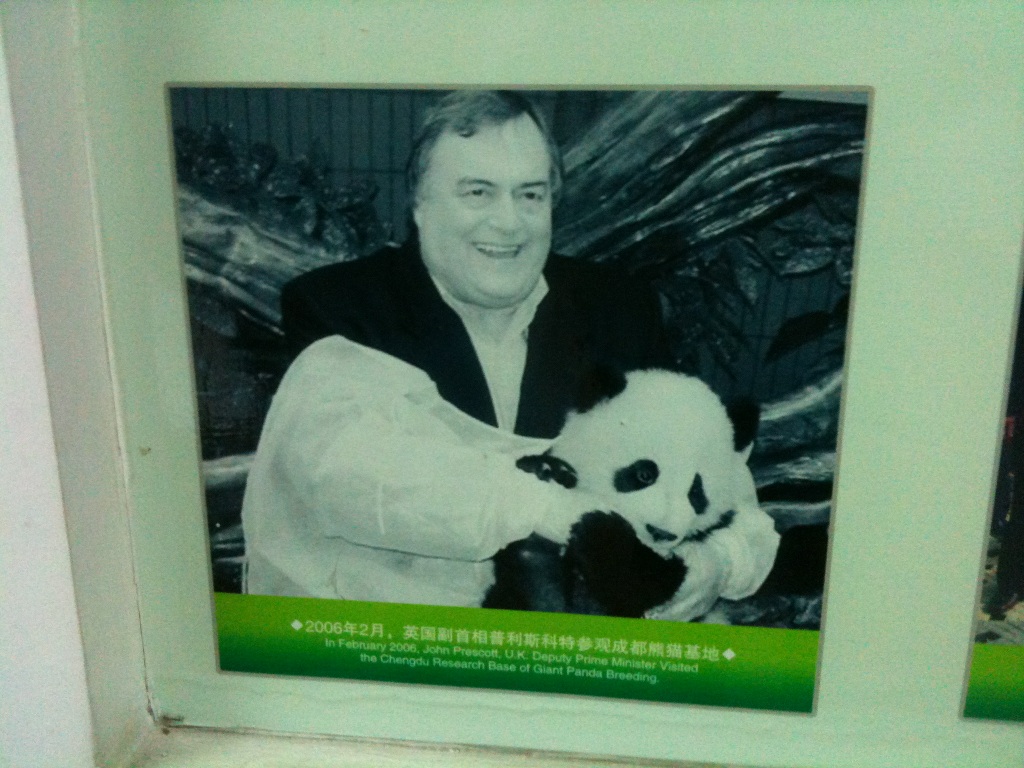
Spotted in Chengdu- another insight into JP

Until now this facet of JPs personality has remained hidden-that of Panda cuddler and Panda calmer

JP’s image is just one of many on the wall of the Panda research centre near Chengdu, which feature the great and the good from all around the world- each one holding a panda.

And i must say that most of the the other images revealed people who look tense and uncomfortable with these bamboo chompers.

But JP has clearly got the knack- his Panda looks calm, well fed and satisfied.

Our dear former deputy PM is clearly a man of many parts

JP calms yet another feral beast