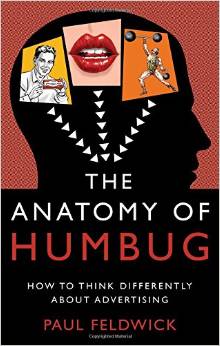
The Anatomy of Humbug


Unknownis the title of a new book by Paul Feldwick about the history of thinking about how to create effective advertising. It is short, clearly written (as you would expect of PF) and full of fascinating stories.
Any one in the biz should read it.
Some of the things found interesting
Many people in the biz do not know this history.

Often this results in practices not being critically examined. “Creative briefs” (which most agencies use) contain phrases like “Target Audience”,”What is the single thing we what to say ?” and “what are the reasons to believe ?” that come from an era when people (Like Rosser Reeves) thought that we actively processed information and should be targeted individually  Two things.  1) We now know -thanks to Kahneman,Robert Heath and others- that a great deal of comprehension is rapid, instinctive, subconscious and depends heavily on context. “The Creative Brief’ may be mechanism we use to have a rational discourse about advertising so that we can design it, but in practice that is not how it will work when people see it. As important as ” the proposition” are creating associations that attach themselves to a brand through imagery, music,stories and characters.   A lot of people know this. But we engage in a “benign conspiracy” to let the creative people have their way. The ads may work but often not in the way we pretend they work when we are in meetings.

In recent years a lot of work has been done to prove that emotion and fame in advertising work better than rational persuasion (See Binet and Field excellent reviews of the IPA effectiveness awards). This has surely helped Adam and Eve sell their recent work to John Lewis. Rational folk (most clients who have to report to boards, also rational) now have an evidence based case for backing emotion and storytelling over rational propositions ( or at least ensuring that the propositional works is separate but integrated.). But in spite of this many persist with the old rationally based tools for developing the ads. In my experience of teaching this is because many time pressed agency executives have either not the time or the inclination to get acquainted with this large body of work from the IPA

The story I found most interesting is how the idea of advertising as rational and consciously processed came to be promoted by the likes of Rooser Reeves and acronyms like AIDA. It was a reaction against the toxic argument that admen were engaged in subconscious manipulation put about by a muck racking journalist called Vance Packard in his book The Hidden Persuaders. 

The 50s and 60s was a time of paranoia in American life and the last thing the admen wanted was to be associated with skulduggery- or a power that could be put to evil purposes. “Motivational Research” was hot in the 1950s. It purported to uncover our subconscious drives but it became a dirty word. The admen closed ranks and colluded in the idea that everything was above board and if any manipulation was going on it was just a form of creative charm magicked up by the creative teams.

Understanding that communication works in lots of different ways and that no one theory is complete is Paul Feldwick’s theme.

It is a good warning against endism as well. The arrival of a new technology or new medium ( such as the internet, or mobile or the Internet of things) always causes some pundits to announce the death of the old way of doing things and a new beginning with new rules.  Paul anatomised this mentality as The Year Zero Narrative and i have heard it a lot among digital folk over the past 10 years. It takes the form not of argument but assertion that ad agency people “just don’t get it”, that “people have fundamentally changed” and are “empowered” and so communication works differently. Now, I think that it is true that there has been radical democratisation of power that has changed the culture and context in which brands operate. Brands do need to offer value to “the empowered” more than before – mobile apps, good service, click and collect delivery etc etc. So there is a big change in behaviour and use of devices and services.

But this is not the same as saying that there has been a fundamental change in human nature and how we process information.

TV advertising is in rude health. Yet it is worth recalling that digital evangelists (about 10 years ago)  predicted the death of “Interruption” at the hand of empowered people using the web and the likes of Sky+ to avoid ads. So perhaps we still like well told stories with wit, characters and music and are prepared to entertain well designed commercial messages.

Calling this “interruption” was a way of dismissing it by giving it an unattractive label. It is an assertion.  But it is not an evidenced based argument.

If you believed the pundits 10 years ago  we should all now be suffering from a form of collective attention deficit disorder – yet we now like multi episode boxed sets. I have just spent several days worth of my life in immersed the world of Breaking Bad. Perhaps it is a reaction. All hyped trends have counter trends.

The Year Zero narrative also is practiced by people who have an interest in the dismissal of the established way. So the next time we read that everything has changed in the communications world at the hands of (say) mobile brandishing millennials or the internet of things we should pause and remember

1) The eternal latin/Italian question “cui bono?”

2) Nobody successful sold out a conference by saying not much has changed


Expect the senior vloggers soon

The Ofcom annual report on the UK communication market  2014_UK_CMR 2 is a treasure trove of data

These data on the rapid growth of Tablet ownership – even among the over 55s- set me thinking about how it might change culture-rapid mass behaviour change normally makes waves


1

Some thoughts

Tablets-At last a device for pleasurable browsing

Smartphones are great for more functional transactions and checking Facebook- but not really for browsing. Laptops are seen by many as work tools. You wouldn’t really want to sit up in bed and browse YouTube on it. But tablets make the whole web experience more like the promise. Fast broadband means an end to irritating buffering and slow downloads at home. 4G, increasingly, delivers broadband on the move.

Multimedia online magazines- video with everything

You can see the signs of this future now. Online media brands (which may still betray their origins in print) are becoming multimedia brands for all ages. MailOnline is a good barometer of change: it has always understood that its audience is attracted by images and personalities rather than text and now most stories feature video too. Check out all their celeb stories on any given day and the team at MailOnline will lever in a video even if the relevance to the story is a tad tendentious. I reckon they fancy some of that pre-roll advertising that has done so well for Youtube (In fact Youtube call this trueview and argue that it is superior to pre roll as you choose to watch).

Youtube embraces all ages

Most videos on YouTube are still pitched at the young. But now Jamie Oliver is committed to developing his you tube channel – and he appeals to all ages from grannies to kids. If you want to know how to do something – from mending a washing machine to doing your hair in the style of Game of Thrones to making lasagna- then there is probably a video about it. Young people know this already but older people are learning fast.

Prediction:senior Zoellas soon

In just a few year mums and dads learnt to Facebook like their kids. I expect the oldsters like myself to start vlogging like their kids. Who will these mature vloggers be? The mums and dads of the new young generation of vloggers are candidates as are a whole host of well-known faces “off the telly” who are hungry for a boost to their career and profiles. Or it might be oldsters we have never heard of before – after all, 3 years ago Zoella was an unknown. Or all three.


Why german culture is fundamentally different to ours

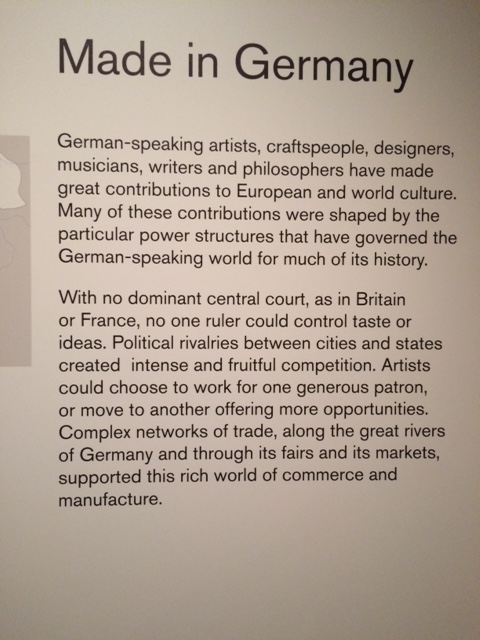
The British museums new show Germany Memories of a Nation is worth as visit and this sign at the exhibition brought me up short

IMG_3509We may think that London is over mighty – the Scots certainly do- but the journey to change British culture to strengthen the regional culture- ie make it more Germam- will be a long one because the process by which the capital became all powerful is a long one too reaching back to the Normans and their castles and The Domesday book and centralised taxation. It will involve sacrifice – giving away powers and the rights to raise taxes from the centre – which are against all the instincts of whitehall and the treasury

It has been a strange reversal of perceptions in my lifetime.

Local Government  is now thought to be a good thing with local politicians like Boris Johnston and Alex Salmond being among the most trusted. Yet in 1980 Margaret Thatcher saw Local Government as a hotbed of the hard left and corruption and was determined to destroy local power. The old Tory prejudices persist. Michael Gove didn’t trust local authorities either and his reforms in Education were about removing local government control.

Perhaps we like the idea of local government because there is so little real power at the local level now- it’s  a kind of nostalgia for vibrant and healthy local democracy that did not exist- and as it is revived the old problems will rear their heads – graft, incompetence and capture of institutions by extremists. It probably won’t happen in London again ( too wealthy and in thrall to Money), but Alex Salmond’s desire to disrupt the centre might be replicated in cities in the north. Remember the Liverpool trots and Derek Hatton ?

Either way I doubt we will ever have a decentralised culture like Germany – the differences run deep and have developed over centuries. Changing it is the work of decades – may be centuries


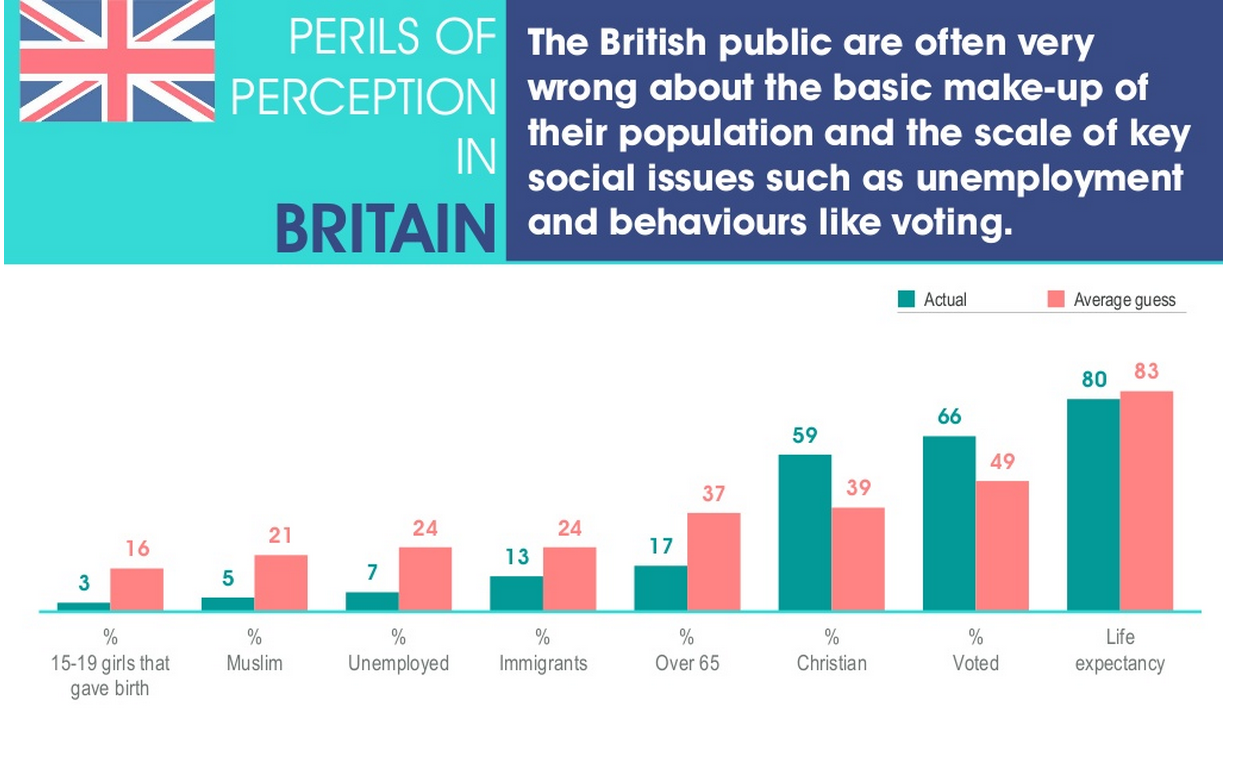
We are fundamentally ignorant about most of the facts of our society

This slide from a quantitive survey by Ipsos Mori came via slideshare

The full presentation is worth a read – it’s an easy read
Screen Shot 2014-12-05 at 10.14.33
This is a worry – as most politicians will seek to trade on these perceptions rather that take a stand for the truth. They have learnt to go with the grain of beliefs rather than fight them, like the good brand marketers they have all become.

Interesting fact is that the one question we do get about right (across the world) is the one about our life expectancy, which might tell us something about narcissism and/or our eternal pre-occupation with our own mortality.

Other interesting fact is that Italy comes out first as the most ignorant nation and we don’t too badly-just ignorant.

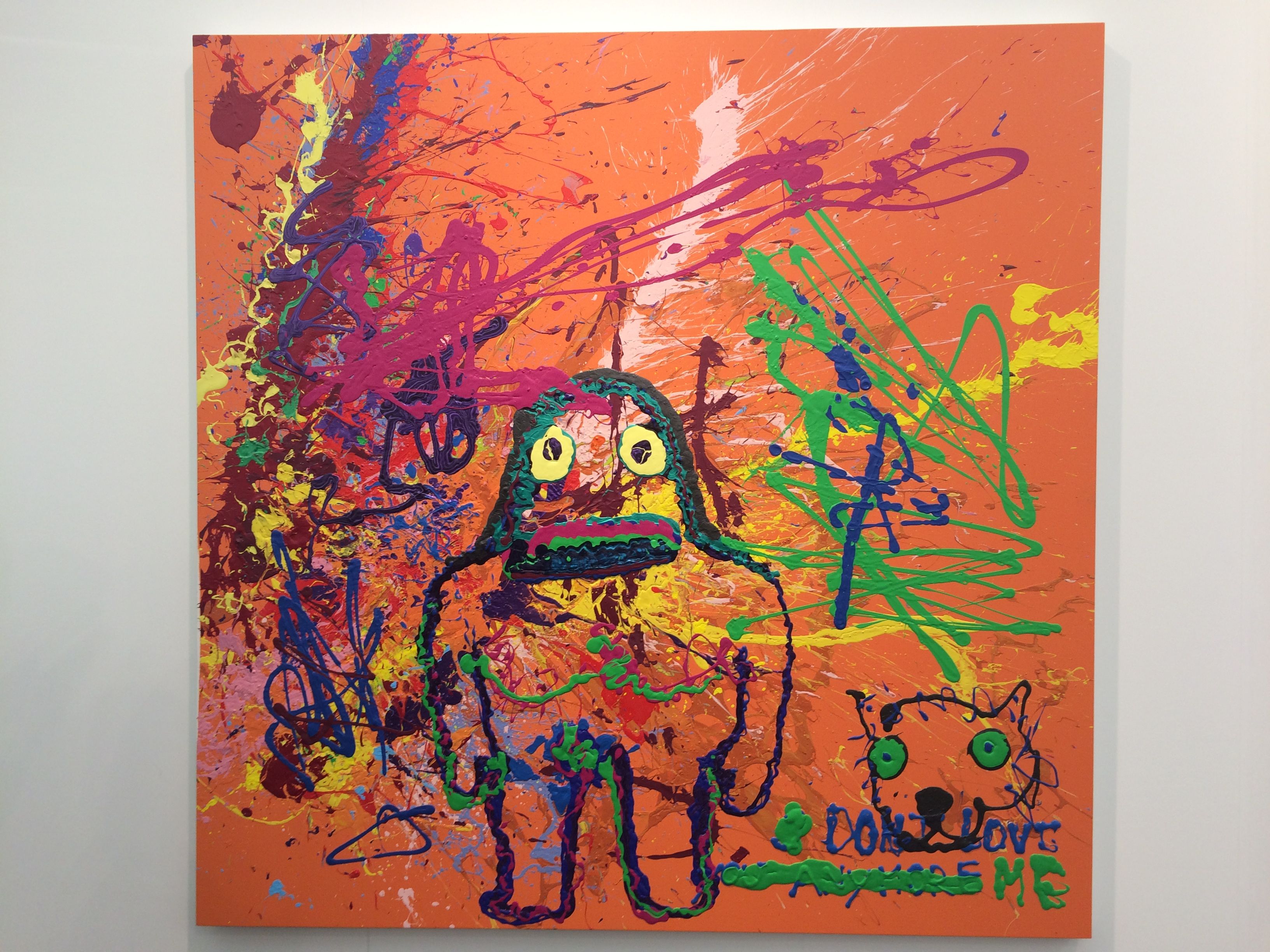
Thoughts at Frieze art fair: artists can be as predictable as admen

Some – like Tracy Emin, Damian Hurst and GIlbert&George- have been in ad business for while. Their styles are so distinctive you know them immediately like a pack of Persil. They have mastered the art of effective branding – with “added value” prices to match

At modern art shows the same ‘big’ themes come up over and over again- here are three you can rely on.
1) The artist getting in touch with his/her inner child – Childhood is a time of both maximum innocence and psychological damage-or both. That tension is makes this a rich theme to exploreIMG_3123 IMG_3127 IMG_3117
2) Wearing  masks– a very ancient theme as it liberates the individual to take on different identities and or behave as badly with as they like. In films people always get murdered at masked balls. Venice loves masks-and is the original city of hidden dangers. Sadistic sex often involves masks- anyway you get the pointIMG_3173 IMG_3187 IMG_3168IMG_3167
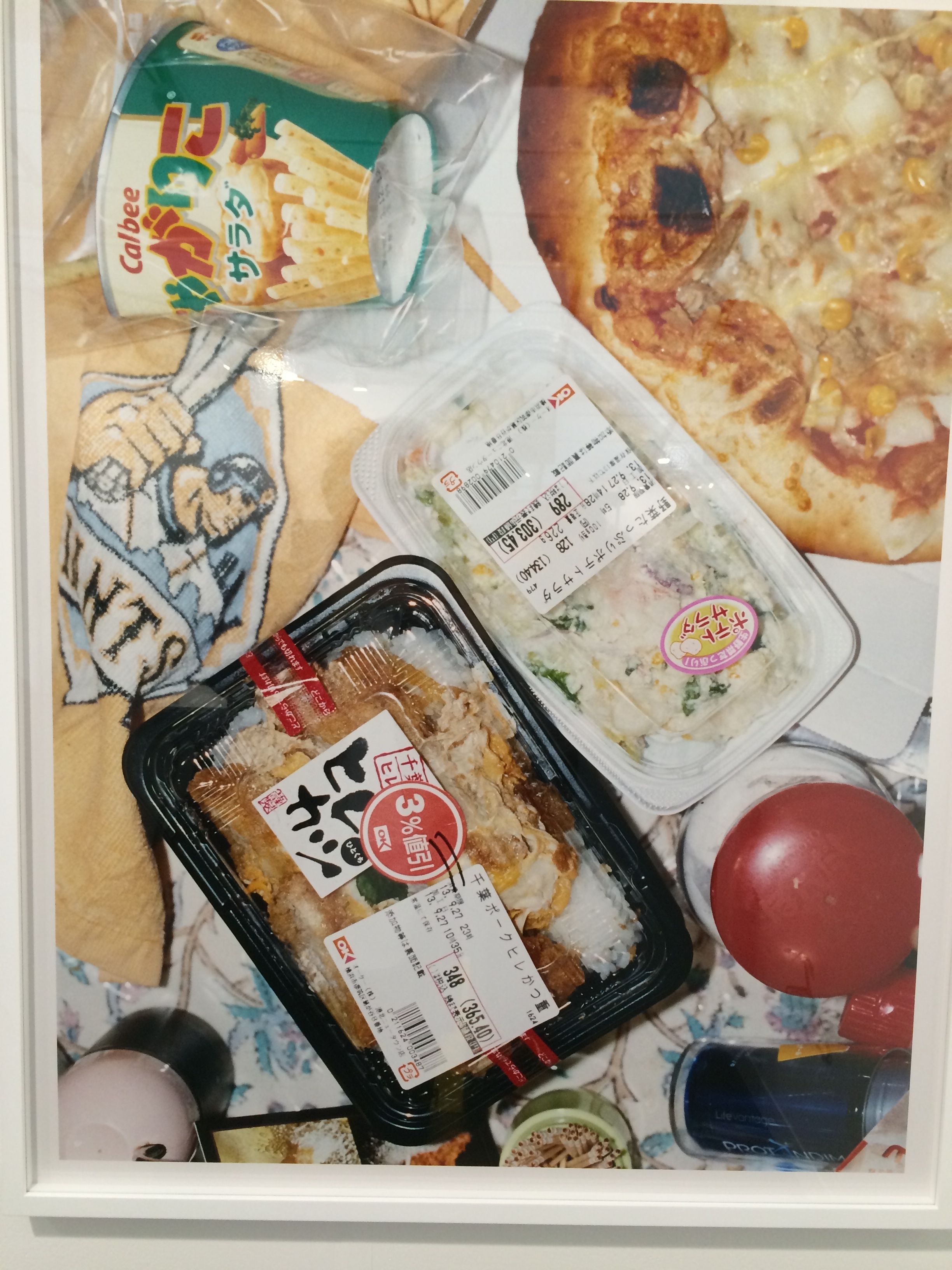
3) Consumerism=polution 

Today there is just too much pollution . It is covering our beaches , making our rivers poisonous and air cancer inducing.

Our Madmen era pleasures in consumerism-those Andy Warhol soup cans seem so innocent now-have been undermined by the smelly decaying byproducts of our obsession with economic growth. Asia ( for which read China) is the epicentre of this collective act of greed & desire driven  self-distruction. Hence these images

IMG_3152 IMG_3153 IMG_3155


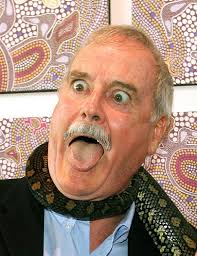
John Cleese on how to be more creative

images


A old film but still a good one –

Scientific proof that to be more creative you have to find ways to be playful.

So if you work at an organisation that wants you to be more creative and yet puts you under constant stress and doesn’t provide the space and time to be playful then it is a contradiction in terms.

What value does a “like” have on Facebook ?

Now that Facebook and Twitter are public companies they are of course hungry for a bigger slice of the advertising pie. But-and it is a big but- they did not fundamentally start out as commercial spaces so they are have to innovate and come up with new advertising formats like “native ads” and “Likes” to get revenue to satisfy their shareholders. Thats ok- if they create formats with real value then they deserve a bigger slice.

Unfortunately these things can be “gamed”

The web – lovely and fascinating though it is – also a place for hucksters and scammers or , if you look at the so-called dark web , much worse. It is a world of link farms and low paid workers sitting behind screens and generating bullshit interest in brands (and other entities looking for business or audience) in return for a few pence.

I don’t blame Facebook. They don’t control the behaviour of others. Nobody can control the scammers.

But this short film explains some of the perils of this and in particular lifts the lid on how likes can be hyped to the point of being meaningless

BTW- it is worth adding that this is an age old problem of new advertising formats which can take a while before they become credible/respectable. In the early days of the poster industry there was a lot of “misreporting”

( to put it at its least libellous). I remember meeting “poster guys” in the Dog and Duck in soho and feeling that there was something a bit dodgy going on.  This was the 1980s I stress – all very above board now.


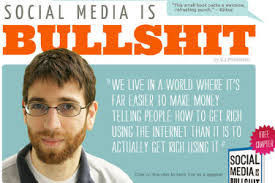
Social media is bullshit

is the title of an enlightening and helpful little book by BJ Mendelson.

Unknown-1

It helps you sort out the crap from the hype. Some things that rang bells

Beware cyber hipster’s thought leadership

A whole class of cyber hipsters is busy creating and spreading hype because it helps their own business/raises their fees as public speakers. Heard of web 2.0? Yup. Tim O’Reilly – an uber cyber hipster -came up with it (probably) and has built a consulting business and a regular expensive conference on the back of it. He can stand for a whole class of cyber hipsters who swim around in the same pool and scratch each others backs- no different them from other walks of life then.


Unknown-2

There are very few pure social media successes

Many so called social media success stories – Think Old Spice man – are not really that. They also had big ad spend and top quality media production behind them.

Cui Bono ? is always a good question

Who benefits from the idea that social media are powerful in building brands?It’s the big platforms themselves- like Facebook and Twitter-who are trying to grab their share of the advertising pie.You’re a dinosaur if you are not using social media aren’t you? well, arent you?

Cue all sorts of “innovations” from these platforms to win more adspend – sponsored tweets/native ads-all of which will be boosted as the next big thing

Talent alone rarely wins out

Unknown-3

Beware the Justin Beiber myth- this is idea that someone with talent (yes he has got some painful to admit) can come from nowhere and break through big time. It is very rare. Mostly when you lift the lid on successes there are big media partners and/or adspend and various other (paid for) boosters behind it.

BJ Mendelson book is useful in helping you develop your bullshit detectors.

The Internet is so young that it is bound to be teaming with hucksters and charlatans- he calls them out.

But he overstates the case.

It may be naive to think that talent alone or great content will win through. Yet yet yet.. access is greatly increased.Everyone can now be a publisher/creator/filmaker/Writer now. You can build a following if you do it well – i.e. you are relevant and/or interesting. Bear in mind though if you have any success you will have to trade with big media and other big beasts of the Internet to get to the next level.

One other good reason to read this book is he has a whole section on how to “game the system” – i.e. get seen as an expert and win profile and followers.

Which rather proves the point that the system is much more open than before