How Getty could have predicted Trump and Sanders

Getty sell their images to agencies who are designing campaigns and so what buyers search for reveals something of the zeitgeist.Agency creative teams have well developed instincts for what is fresh and current. Forget the focus groups, analyse Getty search tends.

“Stand out from the crowd”,”rebellious” and “bold choices” have spiked in search on their website by over 100/200/300 % respectively. As Getty put it as “we become increasingly inundated with mass replicated imagery and aggregated articles our appetite for a unique point of view and stand out visuals increases”  This is a trend they call Outsider in 

Scan 1

Another telling trend is Messthetics, which is a different side of the same coin: as Getty put it ” a breakaway from predictability …the imagery is messy, grimy sweaty, visceral… it comes from our desire to break away from the sanitation and predictability of everyday life and revel in the physicality of human nature .”  Think of the success of campaigns to sell more ugly fruit and veg.

Scan 2

In retrospect the rise of Trump and Sanders seems all too obvious …


Should brands become creators on YouTube?

I spent a happy two years at Google thinking about and advising brand owners about this question. Here is my advice, just published in the spring issue of Market Leader ( which is the UK Marketing Society’s quarterly journal) PDF attached

Julian Saunders

New course launched by APG

I have just designed a new course for APG ( see blurb below) – Book here 

What makes brands grow? How to base your strategic proposals in evidence based thinking – 20th April 9am to noon.

This 3 hour workshop is a hands-on look at the critical evidence based thinking that you need to know from marketing science and behavioural psychology, and how to apply it.

Fast, furious and intellectually stimulating, during this workshop you will learn the concepts and ideas that underpin the best and most authoritative contemporary thinking, from Daniel Kahnemann, Byron Sharp and others, and how and when to apply them to create effective strategies that clients will buy.

This interactive workshop  will look at the truths and untruths that underpin industry thinking and help you to harness the evidence that matters to underpin your work.  

You will learn how to use data to challenge wishful thinking about brands and communication and how to take strategic decisions with confidence

Spring gardens and cute kittens

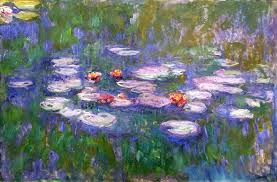
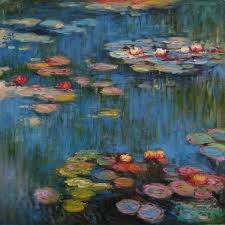
The RA’s new blockbuster show Painting the modern garden  is a sure fire hit. You can be guaranteed at least two hours of calm and visual joy contemplating all the paintings of flowers and gardens, and Monet’s  Waterlilies in particular.

You would not think that they were created at a time of dramatic growth in inhumane factories and grimy cities or that the ghastly products of the armaments industry was shattering mens bodies on an industrial scale in the trenches of The Great War. That is (part of) the point: the British fell in love with their gardens as a places of sanctuary and retreat from the modern world. These paintings are as calming and satisfying as a session of meditation.

imgres-1.jpgimgres-2.jpgimgres.jpg

What has this to do with Kittens?

Each day we watch endlessly depressing news broadcasts and each hour we dance attendance on email, twitter and linked in. So we too need a place of sanctuary. Google researchers (when i worked there) found that a big reason why we can’t resist kitten videos is they make us feel relaxed. That is the insight behind this short film called Kitten Therapy.  I am sure that you won’t be able to resist it. 8 million others have found it irresistible too

You may also like this

If you like RA show you are sure like Delacroix and the rise of modern art  at the National Gallery, a 15 minute walk away .He is the missing link from classical art to the likes of Cezanne , Monet and Renoir. He invented colour theory- the way that certain colours in combination create a particular effect. Take a geeky pleasure in seeing how his love for vivid turquoise and green crop up all the time among his successors, as at the show, you can see his works displayed alongside his disciples.


Saul Leiter: fab value at £3.00

£3.00 gets you into all three shows at the photographers gallery. Saul Leiter is worth the price of the ticket alone. (He is the antidote to Liebovitz’s relentless pursuit of people in the news and boosting of the celebrity machine.)  Although he did commercial work , mainly he walked the streets of New York-often looking through a window made blurry through condensation to capture a passing moment. Oh and he clearly loved snow and umbrellas in the rain.

Documentary on YouTube here . Good to watch before you go. He was going to be a Rabbi before he took another direction. At a time  when most shots appeared in black and white in the prints he spent his own time experimenting with colour. Images are muted and nostalgic- an effect he achieved by using expired/used film. He trained as a painter and so saw the potential in photography for abstraction and painterly images. Here Some shots i grabbed from the show

Big Data Bang at Somerset house

Data brilliantly presented can crystalise a complex issue and to make us think. Fans of David McCandless (information is beautiful) will find plenty of examples in this show-distillations of the world’s data, information and knowledge into beautiful, interesting and, above all, useful visualizations, infographics and diagrams. I expected to see this at the show and it certainly delivered.

But what surprised me ?

  1. Pre-digital data still packs a punch

The most powerful example in the whole show was for me not a whizzy new digital data visualisation. It was over 200 years. It was brutally simple, static and in black and white. It was a visual showing how a slave ship was packed with men and women like sardines.IMG_6443

In advertising we know that emotion is a powerful persuader. This image, though, is bald fact – yet  it is more moving that the very best of the John Lewis ads because it does not try to tug at my heartstrings or tell me what to feel with stirring music. In fact it does the opposite: it invites me to use my own empathy and imagination to conjure up what the awful scene below deck in a slave ship would have looked and smelt like. I have to think for myself, which makes it a more powerful piece of communication by being implicit, than visually explicit storytelling

2) The phrase “cloud computing”  is misleading

Cloud computing conjures up an image of something fluffy, amorphous and insubstantial. In fact it is anything but. Every time you post on Facebook you produce yet more digital landfill. Your pokes and likes end up in a data centre like this one in Alaska

IMG_6397.jpg

A fine example of how a label can change meaning- a bit like called second hand clothing ” vintage”

3) Controlling you own data 

Edward Snowden gets a big shout out at the show for exposing how corporations and governments control and access our personal data. But you knew that already- what to do about it? There is an intriguing little prototype demo at the show of how citizens could control and licence their own data and give selective access to some and block others. Pertinent in view of rise of ad-blocking.

But where are the businesses?

This show which runs till end feb is worth going to – but it’s earnest and arty. For example there is not space commercial organisations like Sky Sports and The Met Office- both of whom have been brilliantly creative in turning data into entertainment. Cricket and those endlessly fascination  weather fronts have been transformed into things of beauty


Smart googling

Aurora magazine recently asked me where and how i look for insights online, so i thought i would share. Here are five I find really useful (heavily influenced i guess from working at Google )

ThinkwithGoogle (www.thinkwithgoogle.com) a treasure trove of think pieces and case histories about good digital marketing .

 Google trends www.google.com/trends: what is trending in search right now? What are people searching for in your market right now? What does that tell you about how culture is changing or how your market is changing? You should check it every day. It might change what you think is really relevant to your brands customers.

 Slideshare www.slideshare.net. Presentations shared on more topics than you can imagine. Want to know more about Behavioural Economics and its practical applications? You will fine several presentations about it here.

 Twitter www.twitter.com If you search Twitter you can find high quality articles. But you need to narrow down it down a bit to get the right stuff. “Milllenials” as a search might be too broad “Millenial employees” or Millennial insights “ or “Millennials brands” gets you a more relevant result (assuming that is what you are looking for)

 YouTube Re:View www.getsubsciptions.withgoogle.com A selection of the best of YouTube every week.. An insight what’s hot in American culture. Sit back and soak it up

The fight for your eyeballs

is the business model of media owners down the years- and that battle has now moved to your smartphone.

Winning apps find ways to “scratch your itches”many times a day. Facebook  is the most energetic in enticing you back to their platform with a continuous flow of digital addiction-it started with “poking” for me and most recently I have found it irresistible not to look back on “memories from a years ago” ( most recent innovation) as well as “my year on Facebook”(which was as i recall launched last Christmas). With Facebook you feel that they constantly at your elbow nudging you check out your page and anxious should you drift away and fall out of the Facebook habit. They are right to be paranoid.

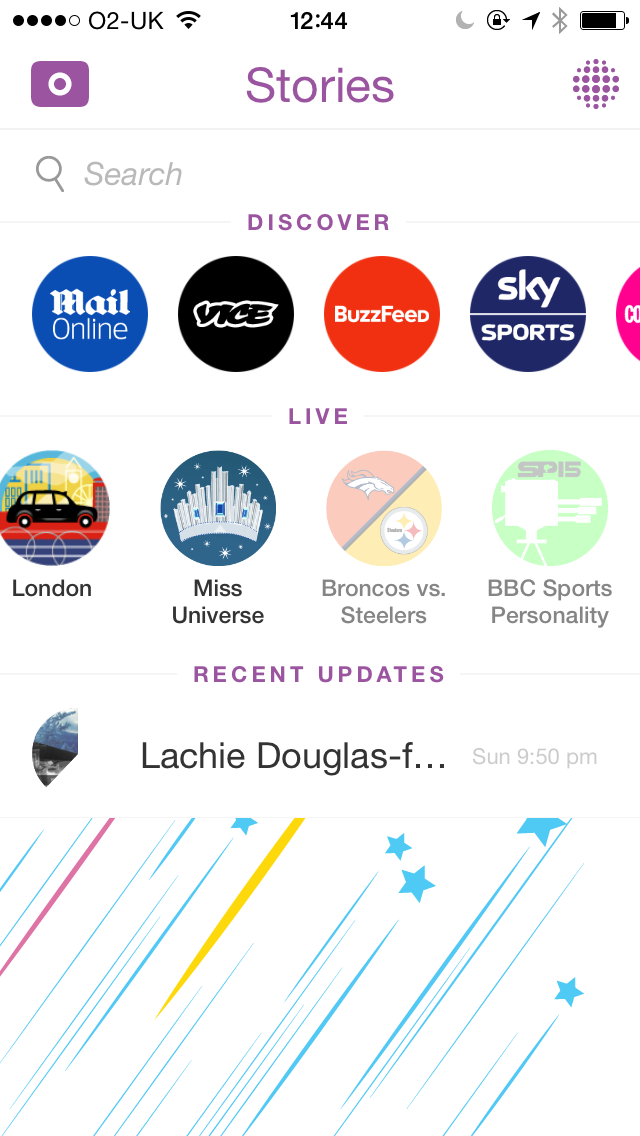
Snapchat has been making moves too – originally, it was a visual messaging app with an auto-delete after viewing.( that was its launch USP).  Then they curated “content snacks” from a whole range of media brands in a section called “discover” (see below)

IMG_6243


But that did not take off and so they have launched a “live” channel which consists of an edited selection of videos submitted by snap-chatters in a particular locality-

“London life” gives you a window into what fellow users up to based on the video clips they submit. It is weirdly fascinating content – rough and ready , generated by ” people like you” and and a “things to do” prompt. For people who submit it is also like a competition – will my clip make it to the final cut ? somehow you can’t resist checking it out – but to work the video mash up  will need to change everyday or even several times a day IMG_6245IMG_6246In the social media app market snapchat is a challenger that has to be inventive just to stay in the game up against a well funded heavy hitter in Facebook

What happens if you don’t keep evolving your app to make it irresistible ?

The recent fate of the CEO of Twitter is a reminder that it is easy to fall off the pace. Across the web you will find the husks of former shakers and movers – like friendster or friends re-united or myspace. It will be interesting to track the innovations of both FB and Snapchat in 2016 because they teach us a lot about how to win and retain attention in “the smartphone economy”- which is shaping up to be as ruthless and competitive as the newspaper market

Are things really getting quicker and quicker ?

‘Tis the season to hear the rousing voice of Noddy Holder in a retail environment wishing us a Merry Christmas and for marketers to opine that this year, as in all previous years, change is getting quicker and quicker. If this was true then by now change would be so fast that our eyes would be popping out of our heads and life would feel like a blur in which you have barely a moment to catch your breath

Here is just a cross section of this kind of talk from last weeks Marketing Week

“The pace of change in all industries is only intensifying with technological progress”

“Developments come fast and furious driven by factors that are out of our control”

“We are now seeing three dimensions of change: complexity and sophistication:sheer breath and range and staggering velocity”

This from a survey of 152 C-suite executives and 56 senior marketers.

I would like to suggest an alternative explanation using some principles from Behavioural Economics

Availability Heuristic. We overestimate the importance of the information available to us. These are types of folk that are overwhelmed by their email inbox and have spotted that communication is speeding up (which it has ) and have extrapolated from this that the world is speeding up.(which may not be true)

Cui Bono: these are also the types of people who receive regular presentations from media agencies,business school academics and big tech companies saying that the world is speeding up and that they should  buy their services to help them with cope with this change. AI has super heated this talk by fuelling the ideas that we are all about to loose our jobs to machine learning ( I am only slightly exaggerating)  Beware – the change merchants have something to sell

Social norming/Bandwagon Effect: All senior execs say that the world is speeding up so it becomes normal to say that the world is speeding up. Everyone is breathing everyone else’s exhaust fumes

Fear: it sounds complacent to say “things are much the same” and nobody wants to be seen as that. Likewise nobody ever sold out a conference by saying that nothing really big has changed/is about the change.

Role models. Big Tech are the darlings of our age ( big profitable growing and successful) and so marketers tend to look to them as role models. And in big tech change is constant. Look at the apps on your mobile (the ones you use regularly) and it becomes clear why. Google, Facebook, Twitter, Pinterest, Uber etc are in a life and death struggle to keep you in the habit of using their service many times a day. That is their business model. Fear and opportunity stalks big tech-once you drop out the habit they are dead in the water – the next Myspace ( remember that – it was not so long ago) And so change in big tech is fast and the winner is the one that constantly innovates its service to keep users hooked. It is the most Darwinian of all the markets and also the most salient- it therefore distorts our view of the world.

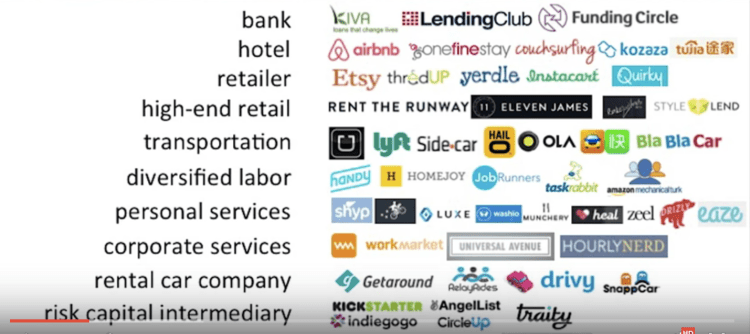
The Uber effect:Bits of markets are changing fast:they are highly visible to us and so we overestimate their importance. Senior executives use Uber in London and the USA and so get  excited by the Uberizing or AirBnBing of many markets through the creation of Peer to Peer markets and networks.(see below). These “disrupters” will grow but at different paces in different sectors and are unlikely to be anything more than niche in for example banking
Screen Shot 2015-11-18 at 5.16.22 PM.png

Get out of the office and look at the real world

A useful corrective would be to visit your local Tesco (still with us ) and have a look at the aisles. There is change – but some of it is slow and the cumulative effect of years of innovation ( think Cider and Snacks). The success of Aldi and Lidl is not sudden but the product of prolonged recession ( ie the slowing down of markets) and decades of building their reputations for quality. Amazon is trying to be the winner takes all in e-commerce (with some success) but that will slow down change. In some markets change will slow as there is consolidation on the supply side ( think Beer). Your Iphone 6 is much like your iphone 5 with a few bells and whistles. The apps you use are the same that you used a few years ago ( Google, Facebook, Twitter, Youtube ) and will be the same in three years time as all in a well funded arms race to keep you in the habit. When it comes to “user behaviour”  a different picture emerges . Some change is constant and some slow.

Counter trend to small and slow: Market consolidation (a bit trend in USA at the moment)  and the market strength of the big brands will have the effect of slowing change. Much change will be a reaction to this and take the form of a counter trend towards small, niche, personal and craft- and therefore rooted in our un-changing humanity. Slow change in other words

Experience/Service innovation through tech

Just back from the Marketing Society Annual conference where much of the talk was about how technology +data are leading to innovation. It’s all about brand building through better more personal experiences, services and speed of new products to market ( with advertising getting barely a mention.)

What are good examples of this? Here is one of my favourites

Disney ‘Magic Band’: “Park guests” use the Magic Band to gain access to the park, get in priority queues for the attractions, pay for their purchases at the concession stands, and even get into their hotel room. Each family member has a wearable band with GPS and radio transmitters that track each other’s location in the park. At the end of their stay, Disney presents the family with a photo diary of their park adventures, having used automatic cameras to snap pictures when the Magic Bands are nearby. And imagine the face of a newly-turned six-year-old who just had his favourite Disney character address him by name and wish him a happy birthday. Disney made a billion dollar investment to create a wearable accessory that changes their park experience completely.imgres-1.jpgimgres.jpg