Coca Cola and the doctrine of happiness

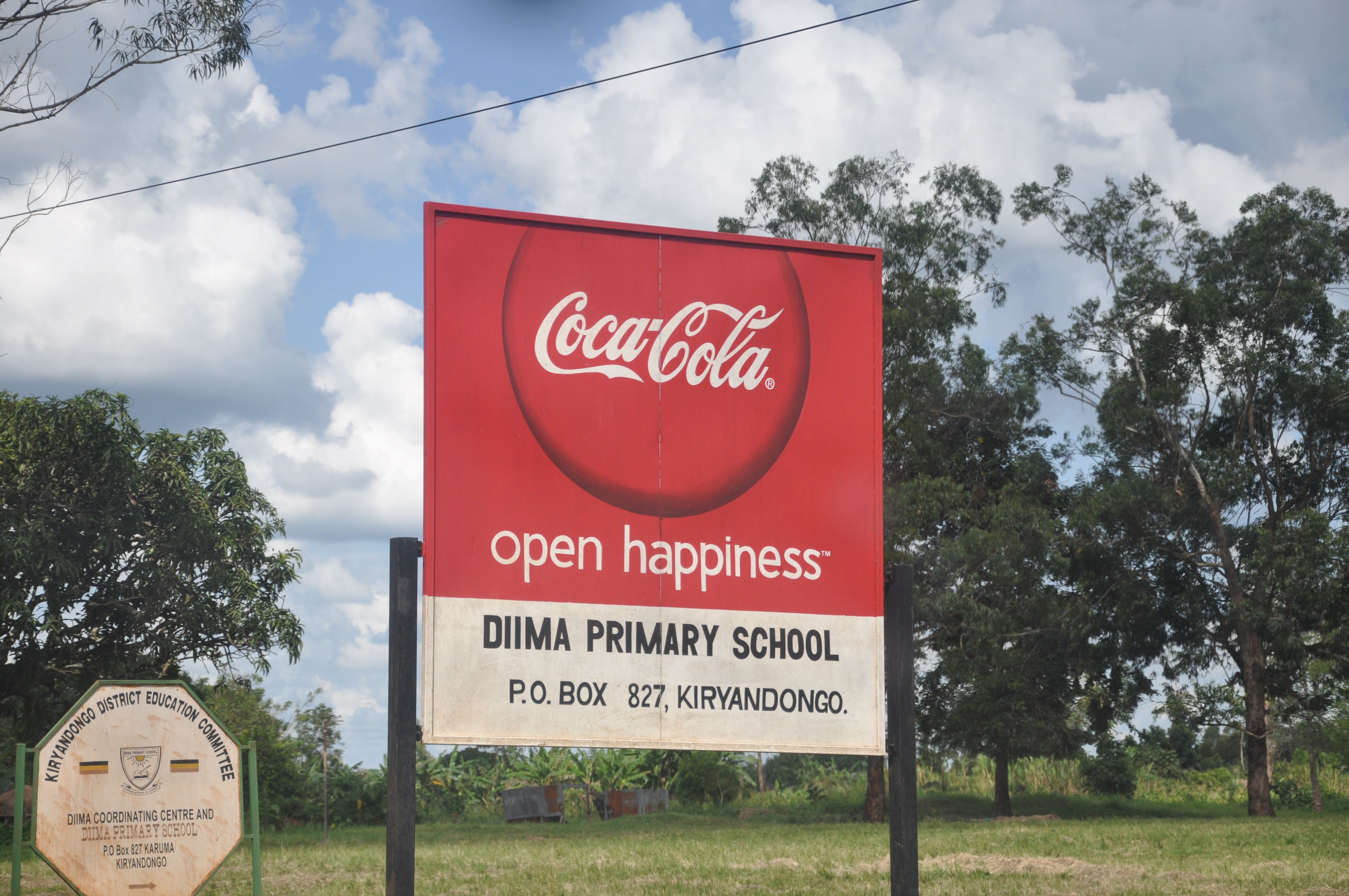
Drive north out of Kampala in Uganda and you will come across many signs like this one – Coca Cola has sponsored a local school and given the school a Coca Cola sign. A example of commerce invading people’s lives and landscapes you might think? But on reflection I think not.Coca Cola schools signs


It is (as I discovered from visiting schools) a fine example sensitivity to local culture and perfect fit between idea and medium,of Coca Cola getting it right by thinking about what their brand idea can means in different cultures and contexts.

In Uganda happiness really is a good education. Many aspire to it and many can’t afford it especially if their parents are either too poor or dead. There are many penniless orphans and struggling single parents burdened with a large brood of offspring and so there are many children for whom schooling is a dream and an aspiration and not, as we have it, a right.

Go inside these schools and you understand something else – they may be very ill-equipped but the mood is one of warmth, energy and joy. Like this one i visited on the outskirts of Kampala.

They had very little as you can see from the classroom but i have not met happier children.

Or children with better taste in Eyewear….kids2 Here one young lad tries on my glasses

So any money contributed to these schools is definitely a contribution to the sum of Ugandan national happiness.

My favourite online resources

I was asked what they were by Aurora magazine – a Karachi based media and marketing magazine

so here there are

Slideshare.net

A treasure trove of PowerPoint presentations on all sorts of topics

If you can’t get to the ultra hip SXSW tech conference in Austin Texas with all the other cutting edge digerati, well, you will find the presentations here

Trendwatching.com

The name says it all. It spots trends globally and identifies products and services that are manifestations of these trends. Lots of brain food for marketers looking to ride the emerging cultural waves

Mashable.com

Good overview of what is hot and important in all things tech- products, software, services and who is making a mint from the valuation of new digital businesses. I read that hackers claim to have cracked Apple’s new fingerprint security software. It is the kind of stuff that affects and can destroy brand reputation.

Warc.com (subscription)

A huge searchable database of articles and studies about marketing, brands, media and communications covering a range of journals including Admap and Marketer Leader. Also has a good daily highlights email with a global perspective to which you can subscribe for free.

McKinsey

I subscribe to McKinsey Quarterly email alerts, which don’t over load you with articles but highlight key issues, and I have just installed the  new McKinsey Insights app for IPads which is an easy to navigate library of their thought leadership pieces

Why we need stories

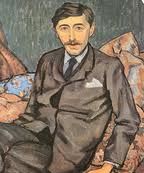
EM Forster
EM Forster

One of the shortest explanations of our profound need for stories comes from EM Forster,

with these two lines

“The King died , and the queen died”

” The King died , and the queen died of grief”

The first line plays to our deepest fears – that life is just a series of random events. You are born and  you die and not much between is certain or fated – except perhaps ( as Woody Allen pointed out ) taxes. No. that won’t do – we need there to be some meaning and for events to be linked with causation  and patterns to give us the feeling that we can make sense of randomness. Which is why we do not just like stories, we need them. Stories are necessary lies.

The second line is also- whilst longer-much more memorable because it is the fragment of a story we can both participate in it and use it to conjure up mental pictures- In this case of grief and what grief looks like.

No wonder that  proselytisers of religions  and  marketers of brands (who are  is in the business of both imparting meaning and being  remembered) use stories.


Brands get public spirited big time

There are emerging trends and then there are fully emerged trends

If you take the  Cannes 2013 awards as a guide  then the idea that brands should take on public spirited causes is now a fully emerged trend

I mean by this not just a commitment to being responsible  in the way they do business. No this is something altogether more high profile.

In this years  awards many of the award winners- a majority perhaps- were companies communicating how they are working on behalf of citizens and championing public spirited causes

Such as these campaigns

  • IBM making billboards into seats and shelters for weary travellers.
  • Dela Dela Funeral Insurance encouraging us to be nice to relatives, before they die.
  • Channel 4 saluting Paralympic athletes.
  • Smart Communications providing textbooks for poor schoolchildren using old mobile phones.
  • Dove encouraging women to value their own beauty.
  • Oreo cookies celebrating diversity.
  • Recife Football Club encouraging organ donation.
  • P&G has become the worlds proud sponsor of mums ( that last one is quite a turnaround- when i started in the biz they were an anonymous chemical company)

What is the thinking behind this? It is  based on the belief that people don’t just buy what you do, they also buy why you do it.

Put another way the model is this-

“Love my values,

Love my brand,

Buy my product or service ( at a premium)”

Is it working ? Well Nielsen have just published some research that suggests that it does –

The proportion of consumers willing to pay more for goods and services from companies engaged in corporate social responsibility has increased to 50% globally, according to new research.
The study from market researchers Nielsen also found that 43% of global respondents have actually spent more on products and services from companies that have implemented programmes to give back to society.
That represents just 7% fewer than those expressing willingness to do so and comes amidst signs of a rising trend of goodwill towards socially responsible brands.
Credit should go to Unilever with their 5 levers of change and to the Dove team- the big players who were at in the start of this recent trend .
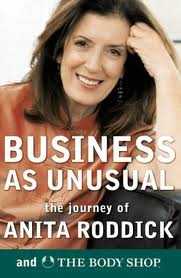
But i don’t think they invented it – “Love my values love my brand” marketing is really a classic challenger brand strategy as explained by Adam Morgan in Eating the Big Fish. People who pioneered this trend go further back like the late and highly visionary Anita Roddick with The Body Shop. It is just that the rest of the marketing world has taken a long time to catch up with Anita
Roddick was well ahead of her time - a true pioneer
Roddick was well ahead of her time – a true pioneer
But why this trend now ? Like a lot of emerged trends, There is not just one factor but a combination
– Follow my leader: when Unilever and P&G do something big time, others follow
– Marketing and business theory. John Kay in Obliquity and Jim Stengel in Grow have made the business performance case ; Companies that purely pursue profits ( aka The Shareholder Value School)  do less well than those who try to do the right thing. And sometimes doing the right thing means championing causes.
-Staff motivation: people are not just motivated by money. They prefer to work at and perform better at places ( private or public sector) that pursue a higher purpose.
-Customer service: Staff who are believers (and not just mercenaries) deliver better service. Companies like John Lewis for example.
– Premium pricing – if Mintel is right we pay more to companies that give back to society
– Communications effectiveness; It gives a company or brand a true story to tell – one that is worth telling in film (still the most moving of media) and a story to  pass on through networks and through social media. Stories worth talking about and participating in.

Islam and a sense of belonging

I do feel watching the British media that there is often a failure of empathy in our discourse about Islam.

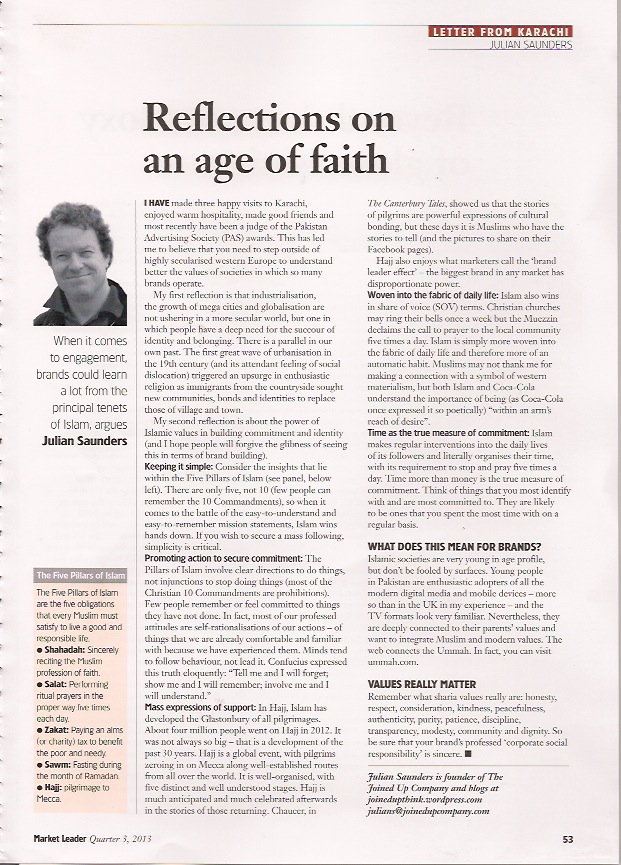
So here us my attempt (inspired by the pleasure i have had from visiting Pakistan and the British Museum’s exhibition about Hajj last year)  to explain the appeal of Islam in terms that a western and secular brand marketer would understand. It has just been published in the most recent issue of Market Leader– so thanks to Judie Lannon,the  visionary editor of ML, for entertaining my views. Scan 2

The mobile revolution is postponed

Well it was at Glastonbury anyway. You know that a technology is not yet really mainstream when people keep talking about it.

Successful technologies become invisible-only when you get a power cut do you have to think about power supplies.

A typical call at Glastonbury- when you could get through – was something along the lines of “wont speak for long the battery on my mobile is running low”. What to do about it ?

1) Turn off your mobile to preserve battery juice

2) Switch to a basic ‘calls and text’ mobile with a long battery life- can’t use apps though- or not easily

3) Spend time queuing and recharging your mobile in one of the two Everything Everywhere recharging tents (which is let’s be frank is a waste of your life)

Rechargetent

Everything Everywhere had sponsored a spiffing new app on which you could plan your Glastonbury experience

Full marks for the design – which is witty

Unknown

But you probably know what i am going to day next – I didn’t use it much as wanted to preserve my battery

Then i thought – I must use it so i can report back to my digital gurus at Aqueduct.

What was it like ?

-Couldn’t get the planner function to retain my selected gigs

-Couldn’t connect to friends on facebook as “Login failed” ( that might have been fun to do- so sorry that did not work)

-Couldn’t get updates and latest news on gigs ( this is an area when the app should beat print hands down)- so missed several “specials” ( and all the bragging rights that go with having seen a famous artist in a minor venue)

– I found The Guardian printed mini guide – which you carry in a little plastic lanyard round your neck- easier and quicker to use. Good on them – they have sponsored Glastonbury for as long as i have been going and deserve the reputational rewards.

Everything Everywhere did as best they could, and if they persist, it will come good- but they and us, the punters, need a lot of progress on the enabling tech – notably battery life and quality/strength of signal. Until such time you can have a brilliant app, with all the bells and whistles on it, and it will still not be as valued as the dear old Guardian’s little printed guide. So at Glastonbury anyway the mobile revolution is postponed.

Most useful mobile function? – the text message: quick, cheap and easy. A bit like The Guardian mini guide.

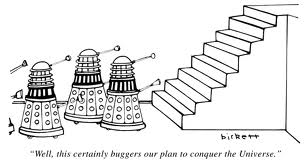
It all made me think of one of my favourite cartoons

Unknown-1

What over 900 case histories tell us about designing effective campaigns

The IPA latest book on effectiveness by Les Binet and Peter field performs a valuable service for hard pressed brand managers and creative directors everywhere . It provides the hard evidence for taking a long term view of brand building. And for creative directors at ad agencies it endorses something that they have known for a long time – really powerfully emotional ads work.

Unknown-4

Here were some of my key take-outs from the excellent presentation Les and Peter made at the IPA

1) Really successful brands balance short-term sales stimulation and long-term building of brand affinity through emotional connection (no surprise there)

2) They also talk to new users and do not just reward existing users. Brands have to keep “feeding the funnel.” The logic of this is that for the vast majority of  brands there are always many more non-users than existing users and if you target non- users you will also “nudge” lapsed users to try again. Again no surprise if you have been brought up on the work of Andrew Ehrenberg- but many brands do not act on this knowledge.

3) Emotion is much more powerful that most people realize- and it is understated because it is difficult to research. Why? What Emotional communications does is to prime our system 1 brains- and we are unable to give an account of how information is being processed by our system 1 brain because this is our subconscious brain.

4) The John Lewis case history provides useful model. They balance activation and brand building and in so doing achieve both short term and long-term effects. They also do not mix the two in any one channel of communication- the TV ads are designed to get a pure emotional response and the activation is information designed to stimulate a sales response. This integrated package increased their share in a highly competitive market.

5) Emotionally primed people want to believe the best of a brand. And therefore emotionally primed people view all messaging from a brand through rose tinted spectacles. That is why an integrated package of emotional and rational communication works. When you see a price ad you are already predisposed to like the brand giving the offer. Your system 2 brain tells you “ that is a good offer and fits my needs now” and your system 1 brain working away in the background endorses it with a feeling that you like the brand or people trying to sell to you.

6) If you take this work from the IPA and relate it to Daniel Kahnemann’s insights into our “two system brain” you also have the psychological language to explain the relationship between emotion and reason in making effective campaigns.

Cameron needs to bring back the adpeople

The big thing that the advertising people understand (that the PR’s don’t often) is that success comes from the long view. Tactics will not be enough to win- you need long term strategy too. The branding game is all about trying to occupy a position for a brand in the mind of consumers (or citizens) and then maintaining it.

It is difficult to create such a position but once created, it can be gold dust.

PR’s ( often ex tabloid Journalists) tend to see success as winning that days news agenda. That of course has it place but the big question is not really “how did todays coverage go” but “what do all these daily media battles add up to in the minds of citizens?” Or in the parlance of political types- “what is our narrative?”

I think we can take a lesson here from Lord Saatchi, one of Margaret Thatcher’s close advisers. Here is what he says ( I have edited his words a bit).

 Nowadays only brutally simple ideas get through. They travel lighter, they travel faster.

 Here is a new business model for marketing, appropriate to the digital age. In this model, companies compete for global ownership of one word in the public mind.

 This is “one word equity”.

 Companies seek to build one word equity – to define the one characteristic they most want instantly associated with their brand around the world, and then own it.

 It is the modern equivalent of the best location in the high street, except the location is in the mind.

You could easily substitute the word party for company.

Labour’s one word

Blair was lucky- he had money to spend. But he did also have one word – Modernisation-and fought various battles that expressed and acted as evidence of this – starting off with the symbolically important removal of clause 4. ( To be fair to Alistair Campbell- he was that rare exception – an ex tabloid journalist who also thought strategically. He “lost it” of course when he go too caught up in daily battles)

So what is current Conservative party key word ?

It is not one that they have chosen but rather has had forced upon them – it is Austerity. And one of the reasons it is so prominent in the Tory narrative is the high profile of the Chancellor whose job it is to deliver “cuts”- which is the key reason to believe that the whole mission of the party is Austerity.

But that is a losing position in the long term. Austerity may deliver growth – but the chances are that another political party will benefit from it. Just as Blair profited  from the successful economic policy of the Major administration.

So what is the answer? Well don’t think about policy. Think about the mental models that we (citizens) use to navigate the world. We are very binary in our approach.

There is yin and yang. There is good and bad. There is winter and summer. There is man and woman (mostly). There is left and right brain. There is emotion and reason. There is wet and dry. There are two teams in most sports. And so on.Unknown

So if Austerity is the Yin – what is the corollary Yang ? (Yin and Yang are of course interdependent as are all the binary examples above)

We do all hold an image in our minds, drawn from nature, of what follows inevitably from “cuts” or “winter” (Austerity is nothing if not wintery). Cuts are seen as positive when they are positioned as pruning.The corollary of pruning is renewal or regrowth. You only have to watch Monty Don to know that cutting back hard can be a good thing in promoting growth. Now that is something that all the swivel eyed looms can understand.They don’t want to be modernised, thank you very much. But they have watched enough Gardener’s World to know that renewal must follow pruning or cuts as sure as spring follows winter.

So my modest suggestion is that that the Conservatives should switch from Austerity to Renewal in everything they do. 

Chancellor Osborne needs to do more that photo calls besides big infrastructure projects. That is about renewal but he is not being explicit or obvious enough.

Policy wonks might dismiss this as a shallow metaphor and an inaccurate description of how economies really work- they are altogether more complex.True.

But that never bothered Margaret Thatcher. She used the metaphor of the housewife running a household budget as a way of explaining what her policies were aiming to do. And she did this simple story over and over again.  That metaphor gave her a rich store of language to use in promoting her policies. Renewal does likewise. And it is not age specific. Swivel eyed looms can understand it as can the young person emerging into the ( very tough) jobs market.

So back to my theme-Cameron needs to bring back the ad people. They understand that the positioning battle for political parties takes place in the minds of citizens and they understand the power of metaphor and story telling to bring that positioning alive.



The sad decline of iTunes

Here is something i have just noticed- I haven’t bought any music from Itunes for over two months and i used to be hooked

And i have a new obsession. airbnb– the website marketplace where you can book accommodation in other people properties. I am currently using it to find a place in NYC. I had never before thought of doing this- but airbnb makes you feel connected to the people you will rent from. You can review each other. You will meet each other. When browsing the pages on NYC you feel that the people who have put it together love not just NYC but all its different neighbourhoods-each has its individual photographic portraits. Oh and by the way – it is much cheaper than staying in a hotel and all in all “more personal’.

I am already browsing the airbnb offers in Istanbul….I think the people at airbnb are great at what they do, believe in what they are doing and it shows.

I think this partly explains why i have fallen out with iTunes. Nowadays it feels like a money machine dedicated to bestsellers. In the early days you sensed it was curated by people who liked music – you could for example find out what the favourite music was of anyone from Jarvis Cocker or Tom Jones… or any number of other people.

I remember looking at Jarvis’s selections and buying some of the music he liked. We were in the club together. Itunes was not just an online store – it curated content. And it could have evolved further in that direction- making it more sociable and including people who loved music and wanted to share the music they like.

Music lovers could have felt connected to music makers- punters like me could have seen it as a place of discovery and pleasure.

But it hasn’t – it has turned into Tesco and is in pursuit of volume and profits. The walled garden approach of Apple has made them complacent and money grabbing.

This of course is bad for music – what is desperately needed more players who love music.

My suggestion is that the big music labels should get together and create a “white label trading platform” that all sorts of people and publications can use as a platform for e-commerce.

The likes of Songlines, for example ( I am subscriber) could create its own online magazine and sell directly to people. Be great if people who love music get to make the money – not just those who have tried to “control the cash register”- like Apple. With the demise of HMV in UK this becomes more urgent. Music is not just about endlessly flogging the best sellers…..it is about the joy of diversity, discovery and sharing.

Tips on sports promotion from Barry Hearn #under the spotlight

To The Marketing Society for an Under the Spotlight evening to hear Barry Hearn speak about his career as a sports promoter. Great fun and full of insight and useful lessons about life and business

His career started by accident – he was FD of a fashion firm-which he had  joined from KPMG (very respectable!)- and had bought a snooker halls only for the property value and as a way of diversifying. Then the BBC televised snooker in colour,the snooker halls filled with budding Doug Mountjoys and he found he  had lucked into a brilliant investment.

His big insight was to market the sport as a soap opera. This was a sport with personalities and recognisable faces-whose agonies we see in close up on TV- and Barry had many of the big ones signed  up to him. It meant he could co-create the characters with the star players.

Steve Davis was boring Steve Davis, Tony Meo was temperamental and italian,Jimmy White was lightening fast , Dennis Taylor was loquacious and Irish, Terry Griffiths was Welsh and therefore prone to burst into song and so on.

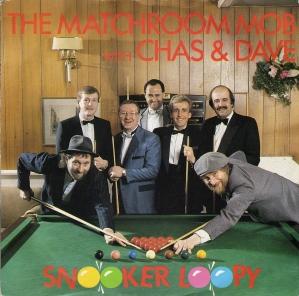
One of Barry's ideas to create profile for his stable of players
One of Barry’s ideas to create profile for his stable of players

These characters were not untrue, just exaggerated versions of their true selves-each player effectively had a platform for storytelling and a persona ideally suited to the needs of journalists who need to fill their papers with stories about people we recognise.

The current talk is all about the power of storytelling driven by the need to create following in social media- but Barry was well ahead of this curve by about three decades.

Barry Hearn presents himself as a lovable and entertaining rascal ( which of course is a true version of himself)

But there is another side- a marketing visionary who understood very early that sport is also about the appeal of character development and storytelling who has never lost sight of the need to give entertainment to the paying punters and value to his sponsors.

An excellent do by the Marketing Society

Barry Hearn certainly disproves the old adage about accountants being boring.