Culture change at NHS -any plans or is it just platitudes?

Just listened to another rather vague interview with Jeremy Hunt about the NHS

( make sure you get that “H” right J.Naughtie)

Lots of vague talk about about the need for culture change without any specifics of what might be the vectors of change.

Sure culture change is not easy and the NHS is a huge organisation but this is no excuse for being so vague and platitudinous.

One area that has not been mentioned ( by Hunt anyway) is a very obvious one – technology and social media platforms in particular  can be harnessed to blow cleansing fresh air through an organisation….they can empower employees and whistle blowers.

But maybe the caution is that this is the equivalent of taking the lid of pandoras box …all manner of (uncontrollable) ghastliness will fly out

Spot inevitabilities:advice for budding entrepreneurs

I went to a reception last week at Wayra- a Telefonica funded incubator -” a digital start up accelerator with a global network of 13 academies in 12 countries” is how they describe themselves).It was courtesy of the kind people at The Foundation who hosted the evening

(Telefonica have put seed funding into 20 start ups in London and are repeating the exercise in other innovation hubs around the world- money it seems is coming from the cash rich corporates rather than the banks

There was an insightful talk by Niall Murphy -a technologist and serial-entrepreneur. Niall co-founded pan European WiFi network The Cloud in 2003

His tip for finding an opportunity for a new business start up :-

“Spot the inevitabilities”. He thought wifi an inevitability in 2003 and set up without having completely worked out the business model. He just knew it would be important and decided to set up in the space.And now he is doing the same thing with the internet of things- hence his new start up.

What is inevitable at some point in the next few years?
Niall was right about wifi and the full implications of this are still working their way through
Stadia and festivals will be high speed Wifi enabled hubs in the next few years.
Many new things will flow from this enabling technology and US sports stadia are leading the way
The likes of Manchester city and man u will be into this too….better fan experience and revenue opportunities ( in game betting etc)As for the Internet of things – be interesting so see how Niall works out the business model at evrythng

I liked too his observation about how big incumbents are a good source of funding for start ups. Faced with disruptive innovation, big corporates find it difficult to adapt. But they know they have to react-one way is to hedge. Place a bet against yourself  with the start up that threatens you. If it goes wrong no matter-it does not affect the mothership. If it does prove to be the future, they have placed a smart bet. Top tip then is to approach the people whose business you are about to undermine-the smart ones will invest in you as a hedge.

A ferment of debate in China about the way ahead

My fourth visit to LSE SU The China Development forum and the most interesting yet

The change in leadership has resulted in a ferment of debate about the way forward

Much of this open and enabled by Weibo. Public intellectuals (and not just the people) now use Weibo to air their views and get a following.

It may not be democracy but clearly there is much less self-censorship when it comes to talking about reform and everyone is talking about it

What stood out?

1) The symbolism of the new leader’s behaviour

Kevin Rudd pointed out that the first acts of Xi Jinping have been very significant – visiting the same places as Deng Xiaoping such as Shenzhen to signal he is a reformer/conspicuous absence of speeches praising the previous leaders /No crackdown on the Southern Weekend journalists who were striking in support of free speech and much more. Everyone in China-where leadership symbolism is closely followed will have got the point. The expectations for reform are now high and will most likely be revealed at the Third Plenum in the autumn

2) Reform, Reform Reform

Everyone was for it and thought it long overdue. Bear in mind though that left-wingers, nationalists and authoritarians were not well represented at the Forum.

But there were lots of different views on what reform is needed

(More on what type of reform in the next posting)

3) Prospects for the economy

Some things don’t change. The usual Manichean view of the Chinese economy were on display- “it’s about to collapse/the statistics are made up/” (Gordon Chang)

” It’s powering ahead only a bit slower” (Everyone else). There was, of course, the barely suppressed triumphalism (lips being metaphorically smacked about when China will overtake USA) and some bien pensant lip service to the idea that there are not really any winners if Europe stagnates and the USA grows very slowly.

Couple of predictions:-

When China overtakes the USA there will be a surge of national pride, as there was when Hong Kong was returned. (But in this China will be no different to the triumphalism in USA in the 20th century and Britain in the 19th century.)

At the same time American Economists and commentators will say that the number are falsely inflated

3) The meaning of Brand China

Much talk about “soft power” and what it means but no consensus. Economic power brings with it a growing interest in Chinese culture -what will be China’s distinctive contribution to the world apart from cheap goods and rampant resources hunger in Africa?

The most interesting insight here was into the “brand meaning” of USA v China

USA stands for reinvention. It is an immigrant society – people left their old countries to reinvent themselves in a new country. You can reinvent yourself many times in lifetime-go bankrupt and rise again or have cosmetic surgery and reinvent your look. In America it is never too late and you are never too old to reinvent yourself. This is reflected in the optimistic language and faith that US politicians have about a return to growth. The American economy will reinvent itself through individual endeavor and entrepreneurship. That is the master narrative.

China, by contrast, is an ancient culture. Very conscious of its history. And that is a history of frequent collapses and chaos. The discourse of its politicians is altogether more guarded. China may be growing at the rate of 10% – X 3 that of the USA-but leaders talk of “challenging conditions.”

4) Rediscovering the humanities and humanity

The rush to modernity in China is causing more public intellectuals (Tu Weiming) to talk about the need to cherish the more balanced and interdependent philosophies of the ancients and especially Confucius.

Education- it was argued- needs to change in China- fewer people studying business administration to get a top job and a rediscovery of the humanities.

An appreciation that happiness is not just about wealth but human flourishing in the broader sense.


The problem with this is that Confucian ideas are subtle and not as easy grasp as the readily understood concepts of individualism, freedom and democracy

5) “Soft Power”

So it is difficult to see Confucianism as China’s soft power- not least because a grasp of the language is needed to truly understand its concepts.

In the west (Martin Jacques’s point) a Chinese lifestyle will not (for many years) be aspirational because the vast majority of people are still poor. China may be a powerhouse but the reality of many people’s lives is hard and limited. The average American and Brit have lifestyle that is the envy of most Chinese- and will do for the foreseeable future

Soft power is however already being exerted in Africa. The dominant idea that China stands for here is Competent Authoritarian Government.

 6) CCP=competent authoritarianism

If the CCP can maintain it legitimacy through tackling corruption (and perhaps introducing some internal democracy within the party) this model and this idea will become more appealing.

If the EC remains stuck in battles over the future of the Euro and if the USA remains in gridlock (more fiscal cliffs and a president locked in antipathy with Congress) then the competence of the Chinese model will look more appealing. That a lot of ifs – but you have to say the Chinese Leadership have been better at economic management and are very conscious of the need for radical reform to achieve the next phase of growth. How far they go remains to be seen – but you cannot miss the public symbolism of Xi Jinping.

Prepare for black swans to make a nonsense of all the economist’s predictions (as well as mine)

how to write advertising copy that people don’t mind reading

Robert Levenson ( legendary DDB copywriter) was asked how he wrote such good copy for ads

I like his answer-

“I always started by writing ‘Dear Charlie’, like writing to a friend. And then I would say what I had to say, and, at the end I would cross out ‘Dear Charlie’, and I was alright”

Coding and creativity

To RSA to see an empassioned and excellent talk by Tom Armitage as part of BBC radio 4’s For thought series.

His argument – teach code  in schools

But not because as Michael Gove has it – to “stay competitive in the global economy”

But because code is one of the unpinning grammars of life now.

To be truly literate now you need not just to be able to read but also write. Children should not just be trained in technology but rather introduced to code and allow to play with it and discover what is possible. They need to be able to both read and write in code.

As John Naughton pithily put it –  you would not want your children to have sex training at schools so why would you want them to have IT training. What you need is education.

(An earlier grammar, latin, tells us the true meaning of education. It is is from “e duco” – I lead out or i bring out. Children need learn code in order to bring out the best in them- to enable and empower them. My daughters “IT training” at school  seemed to consist of getting her to build a database-which is just fine if she is doing a vocational course in marketing or business studies)

In other words Tom wants to rescue code from a merely utilitarian ghetto.”Computer Science”, as it is called in our universities, is not just left brain and rational. It is creative too – understanding the grammar of computers empowers you to create your own IP and not use other people’s systems.

The argument is really another skirmish in CP Snow’s two cultures debate – Snow argued that the breakdown of communication between the “two cultures” of modern society – the sciences and the humanities – was a major hindrance to solving the world’s problems. Code is not just for the geeks and nerds  (who are doing things that our arts educated and lawyerly elites perhaps don’t really understand? I may be underestimating Mr Gove..)

And of course, this is of value to the economy. The games industry, which is dynamic and profitable for UKplc, is the product of the coming together of arts and science, of storytelling, design and graphics along with the writing of code.  Tom  pointed out that  Steve Job’s vision for desirable and user friendly devices was influenced by his love of calligraphy. Art and science again. If you teach code who knows what new ideas (and new IP) will be created-perhaps a whole new industry. 20 years ago you would not have guessed that gaming would be so big.

Starting a movement

To the RSA for an excellent talk by Jeremy Heimans of Purpose 

He is one of a new breed of “Movement Entrepreneurs” – who brings practical knowledge and insight about how the radical democratisation of the web is changing politics and campaigning. Now more than ever you can start a popular movement – not just locally but globally-enabled by tech.

Lots of good examples such as avaaz and getup

His top tips worth noting on how to start a movement

-Dont rely too much on The Charismatic Leader ( it can go wrong- think Lance Armstrong) – what you need is the right purpose

-Use institutional power but don’t get institutionalised

( David Milliband made the excellent point that if you want to have influence you have to map power structures. Sometimes these are not very visible or even widely known but they are very powerful – such as pension funds and mutual funds)

– a movement is not an internet meme

– Be online and especially be hyper local

-Soundbites do not engage any longer ( Forget Alistair Campbell) think storytelling

-Go transnational

-To get new members make it very easy for them to act ( remove barriers to action)

-Use the mainstream tech – don’t get over excited by the leading edge stuff – text or even fax may be better that a hip new app

-Fund well at the start and then get funding by the people

-Deeply embed participation ( great danger here is to message at people and think “gosh I have got a huge database must do some CRM”. Obama was highly participative in 2008 and then people started to feel targeted with messages

-Action leads to hope, not hope leads to action ( Supported by the idea of The endowment effect from Behavioral psychology -we  are more committed to something we have a hand in creating). Change minds by getting people to do things. The attitude change follows the behaviour change – not the other way round

The big question though is how does it work when it is not a single issue or the challenge is necessarily complex- such the ungoverned part of the oceans – being raped and pillaged according to David Milliband- or climate change). That is still a tough one . Watch this space. Certainly watch what Purpose do

what are 5 important themes for brands in 2012

I was asked this question by Aurora magazine ( which is a cross between Marketing Week and Campaign in Pakistan- edited by the excellent Mary-Lou Andrew). It set me thinking. If you ask this question now you are no longer just asking about the narrow question of winning and retaining customers – you are in fact asking about how brands fit into the wider picture of society, technology and government, especially as the state retreats.

Here were my 5

Business for Good

10 years ago companies started to get CSR departments- but was it just a fig leaf whilst the company carried on as before? The suspicion was yes and not the fig leaves were not big enough to cover the private parts

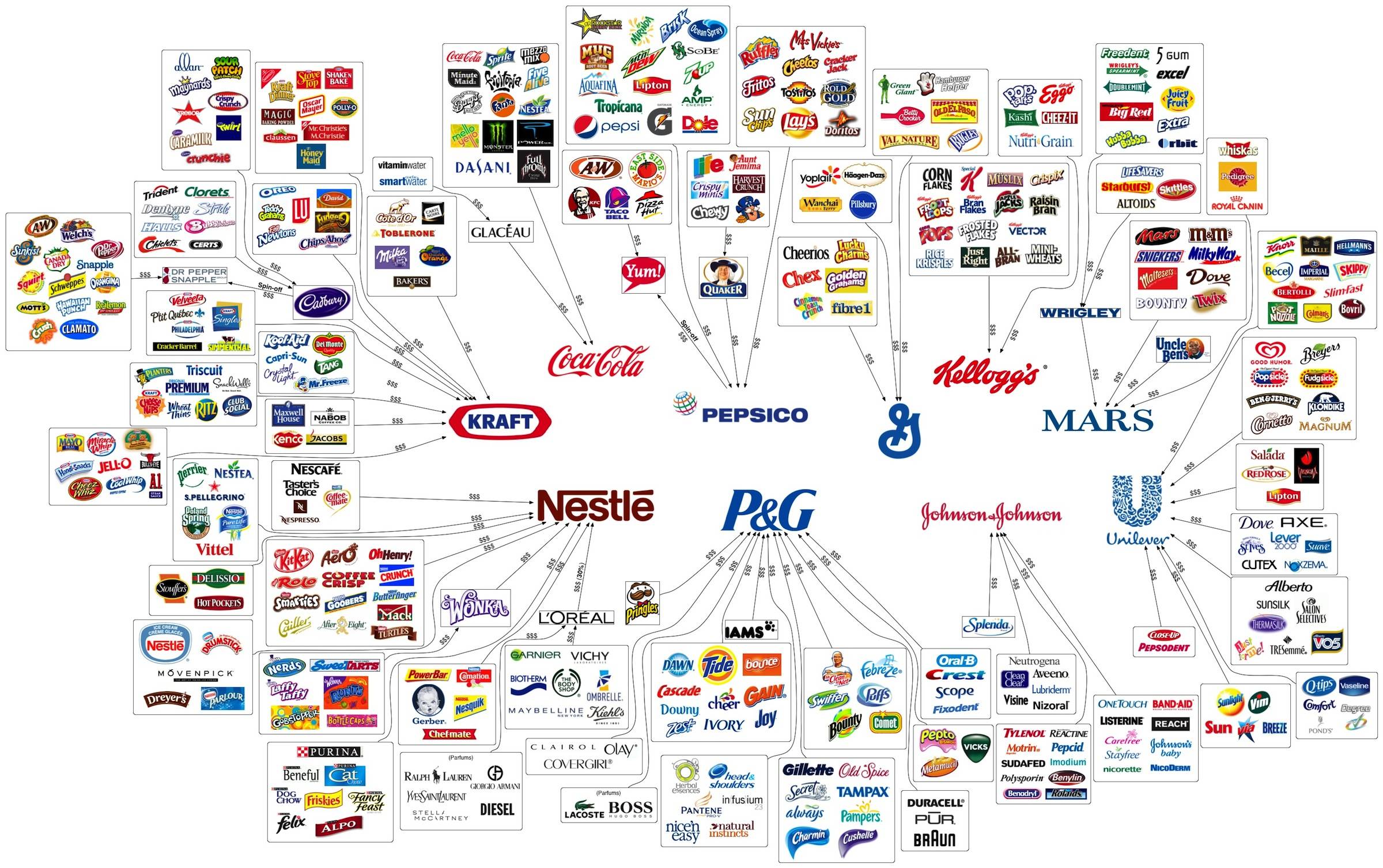
Then Unilever closed its CSR department and said that ethical behaviour was its whole business (see their 5 levers of change). Last year, Jim Stengel ( ex P&G top marketer) said (in Grow the business case for brand ideals is not about altruism or corporate social responsibility. It is about expressing a business’s fundamental reason for being and powering its growth. A big trend- and the likes of Unilever and P&G do make the weather..

The bigger picture is that as the state retreats outsourcing is on the rise- cue more scandals as we resent private companies making profits out of our taxes. Outsourcing is a ghastly word – a damning association for Mitt Romney even in business friendly USA. These companies desperately need to express and believe in a higher purpose- not least as a defence agains public skepticism about their motives.

Volunteering

It was the surprise hit of the London 2012 Olympics- proof that great customer experience is the best form of marketing and the most effective way to build reputation

We are all now interested in how we can keep all that good will and energy going and apply it to other big challenges- especially as the state is in retreat. How can it help in other areas- the health service and social care for example? Volunteering is how the justice system has run in the UK since time immemorial in the form of ( unpaid ) Justices or the Peace. Can the model be applied to other areas of civic society?

The clues are there in the olympic experience  and they are all to do with how you treat people who do the volunteering

Make it feel important , fun, rewarding and sociable- give people a sense of status as volunteers.

Try not to make it feel like ‘ a duty’

This is The Big Society – to make it happen means dropping the grandiose policy wonkery around it and thinking about the things that give us pleasure and make us feel recognised and rewarded.

 Authentic cultural experiences

All trends have counter trends – as many have become more isolated-slaves to a flood of emails and tweets ,so we want to get back into the real world

Music festivals have grown fast over the past decade and now cultural festivals and book fairs are growing too. The Hay book festival has gone international. I expect Karachi’s young book festival to be as big as Jaipur soon – it will be an authentic expression of Pakistan’s vibrant literature and art.

The mobile personal screen

The mobile is no longer a communications device- it is turning into another screen that we carry around and by which we navigate the world.

The drivers of this are device innovation, a dynamic app economy and lower costs. Huawei (chinese) smartphones will make smartphones available to more people soon – not just those who can afford Iphones

To call this “mobile marketing” is to miss the more radical nature of the mobile revolution. This will collapse the separation between the real and virtual worlds. The mobile- as last supported by high speed internet access- will be a tool for adding whole other dimension to your experiences in shops, streets, sports stadia and at events. Of course big data will get in on the act and see this as a chance to target us with relevant messages- right person, right time ,right place is more possible. But the bigger opportunity is to ask – what portable service can i give my customers that they value and use to navigate the world around them and connect with their networks. Foursquare is just the beginning

Food prices and poverty

Food prices are going up as the harvest has been poor in the USA- expect protectionism to grow as countries like Russia seek to hold onto more of their food to feed their own people. This is understandable but misguided and a bad idea for everyone.

These rises will hit the poor hardest as they spend a much greater proportion of their money than the middle classes on just keeping body and soul together. The so-called developed nations will have to get used to more and more soup kitchens in their poorer cities (the Northern ones in the UK).

And for the big food and retail brands it will represent a challenge- the best will seize the opportunity to demonstrate that business is for good and not just for profit.

Islam simply has better marketing

When the history of the 21st century comes to be written one big theme will be the rise and rise of Islam. A complex issue of course but to a marketers eyes there is a simpler truth: Islam is based on much better brand marketing principles. By this i means it has much better ideas about how to secure peoples commitment and give people a sense of belonging – two things that really successful brands do. (The closest we come to it is Apple and Steve Jobs – a kind of flawed secular saint who built temples to technology)

Consider the obvious strengths of the 5 Pillars of Islam

-There are only 5 not 10 – few people can remember the 10 commandments- so when it comes to the battle of the easy to understand and easy to remember mission statements Islam wins hands down

-Islam Pillars involve clear directions to do things not injunctions to stop doing things ( most of the 10 commandment are prohibitions). Few people remember or feel committed to things they have not done. In fact most of our professed attitudes are self rationalisations of actions we have already taken

-In the Hajj, Islam has set up the Glastonbury of all pilgrimages. It is big,it is global, it is a joyful experience, it is well organised, it is much anticipated and much celebrated afterwards in the stories of those returning from Hajj- and all Muslims want to be a part of it.Chaucer showed us that the stories of pilgrims are powerful expressions of shared experiences but it is Muslims who have the stories to tell today.

The Hajj enjoys what marketers call “the brand leader effect” -the biggest brand in any market has disproportionate power. All Muslims understand that they should go on Hajj which has one famous location in Mecca. A tiny minority of Christians may make it to Rome or Santiago to Compostella.

Islam also wins the broadcast  Share Of Voice (SOV) argument by a distance. Christian churches may peel their bells once a week on Sunday mornings but the Muazzin declaims the call to prayer to the local community 5 times a day from a load speaker mounted in the minaret of the mosque. That’s a SOV of 35:1 in favour of Islam. So, Islam is simply more present in communities, more woven into the fabric of daily life and therefore more of an automatic habit- something that is also at the heart of Coca Cola’s success as a brand (as well as the rise of the coffee brands like Cafe Nero). Muslims may not thank me for making a connection with this symbol of western materialism but but both Islam and Coca Cola understand the importance of ( as Coca Cola once expressed is so poetically) of being “within an arm’s reach of desire”.

What to watch for as new leaders take over in China

To the China Development forum at LSE for the second time ( I went last in 2010)

And it has both grown and become “more Chinese”- 50 % of the talks were in mandarin.

This helped – many of the speakers were very funny in their own tongue- so unlike the rather pompous business events you sometimes find in USA or Europe.

Three things stood out for me – things worth tracking and monitoring for the sake of both China and the rest of us

How green will Chinese cities be?

Prof Ricky Burdett showed data demonstrating that American cities are about as un-green as it is possible to be and none of us can afford for the rapidly swelling cities all across China (and India for that matter) to develop this way. China has to be at the forefront of green tech in architecture, city planning and public transport infrastructure. If not we will all fry –such is the scale of urbanization in China and the Indian subcontinent.

Interesting facts; 75% of CO2 emissions come from cities- so much for all those farting cows- and Sao Paulo adds a 1000 cars everyday.

Implication:

Planners will have difficulty choking off the desires of ordinary people to share in the rewards and pleasures of a consumer society. Perhaps only an authoritarian regime can do it?

How tolerant will the new generation of Chinese leaders be of social media and in particular Weibo?

Social media are being used to spread news outside of official channels, to expose injustice as well as corrupt/inept officials.

Fei Deng showed how Weibo could be used to help trafficked children get back to their a parents and expose that fact that school children were not being properly fed at lunchtime. He was careful to position what he does as being in partnership with the central government- in other words as a kind of safety value for discontents and social justice that could otherwise lead to unrest.

How social media were used to break the story of a train crash in last year illustrated that we are in a time both change and ambiguity. When the story broke it was covered online and in local papers-much more widely read that national papers in China. Then the government tried to stop coverage : the failure of one of the new high speed trains was seen as a national humiliation to be avoided. Then Hu Jintao visited the crash site legitimizing media coverage on all media.

Famous blogger Isaac Mao said he felt that the censors would soon not be able to keep up with the sheer volume of content online. Yet he also pointed out later that censorship is an outsourced government funded industry that will both protect and advance its own interests- so the surveillance industry might just grow in tandem. One to watch. I sense this is what the experts really think:- social media are now too big to keep a lid on it and any attempt to do so would merely stimulate the ingenuity of the countries youth to get round it- and no sensible leader would want to do that.

Can Chinese start-ups and entrepreneurs get enough access to funding?

The development of SMEs is key to a consumer society and is being held back by lack of ready access to funds (the view of Prof Weiying Zhang).

Most have to rely on angel investors and/or connections to get their start up funds.

Thus being an entrepreneur has becomes a privilege not a right. This is holding back the economy and the amount of disposable income people have.

For SMEs to develop more rapidly they need 1) protection ( for their IP/from predatory SOEs),2) freedom to start whatever kind of business they want to start and 3) access to funds at a good rate.

In future the shift away from a SOE dominated economy to independent private companies will bring with it fundamental changes in both politics and the prosperity of ordinary Chinese-it will not just disseminate more wealth, it will change the culture as well. No going back.