Virtual Reality, other innovations and what it might mean for brands

https://www.youtube.com/watch?v=7dIvGaJZ8Cc

This is worth a watch -especially from about half way through (Declaration of interest- Lars leads the team in which i work at Google -known as The Zoo).

Lars explains what the Zoo is,what work it does and (most interestingly) introduces some of the cool stuff that we are going to see in Gaming and Filmmaking making soon. These give a glimpse what’s going to be possible and applied in other ways – such as in retail, services innovation and “brand experiences” in general

(Innovation in gaming tends flow down and out and become more mainstream in marketing communications over time)

I will do a number of posts over the next month of examples of how tech is making live experience better – easier and more pleasurable- right now. It helps explain why brands need to build creative technologists and data analysts into the way they seek to improve ” the service experience”
So have brands really changed that much ?

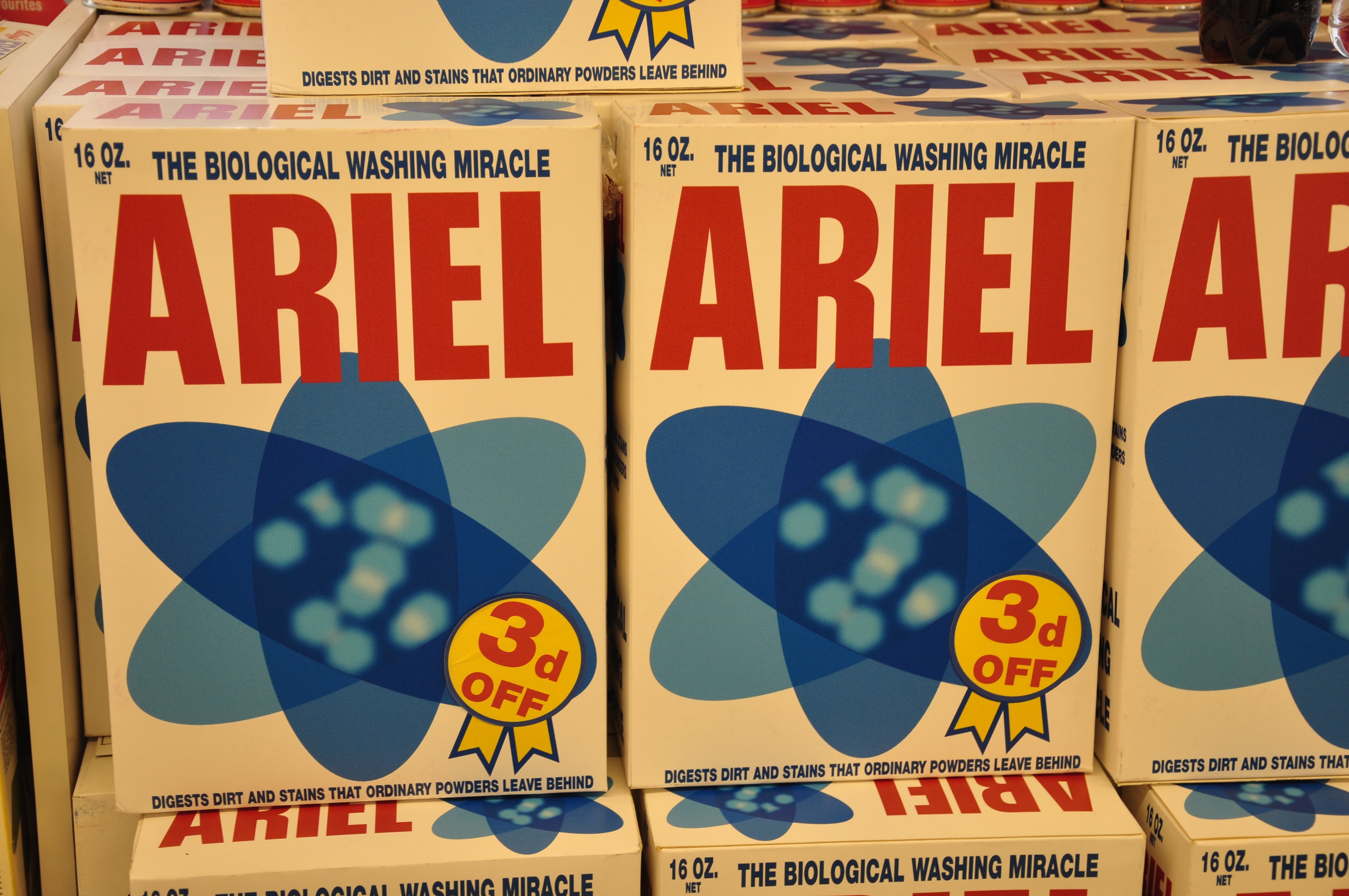
One of the little joys of the Goodwood revival is a re-created Tesco store from the early sixties- complete with packaging from the era. It is almost worth the price of the ticket.
Most striking thing for me was how little packs had changed: some like Marmite and Heinz have just been refreshed slowly over time-a time visitor from the 60s would recognise them immediately

Perhaps product claims were bolder and more arresting back then

Like Ariel’s “The Biological Washing Miracle” . Today its “Complete”- which somehow doesn’t have the same confidence and chutzpah. That said its identity is still the same – it’s still the sciency one.

And i suspect that in a few years time when Higher Purpose Branding ( A.K.A. brands “doing good” and trying to save the world) has passed its current peak of fashionability this will still be true. Ariel will be the sciency one and Persil will be the caring one. Who know perhaps the good folk at P&G will think they need a bold and confident performance claim once again.

DSC_0036


imgres

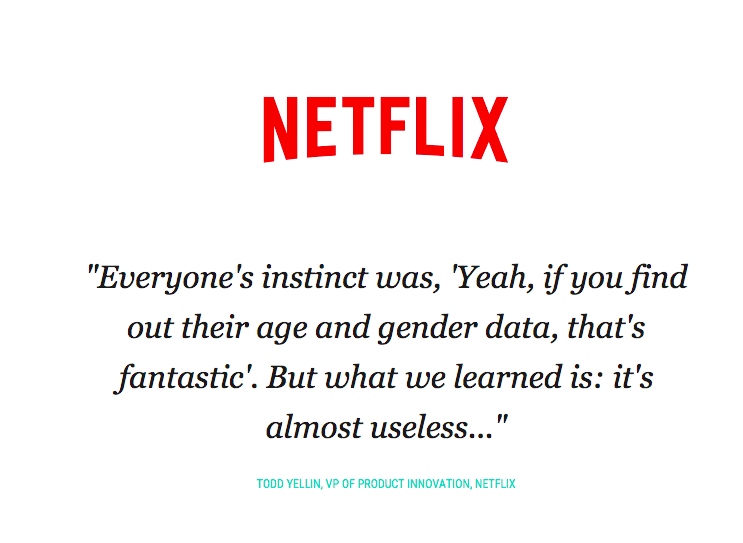
The death of demographics and its consequences

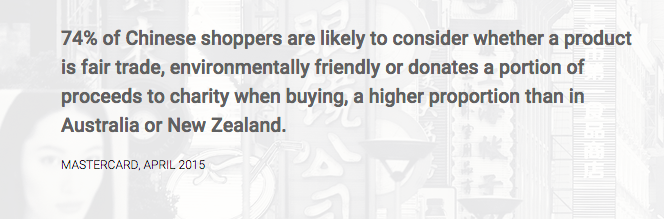
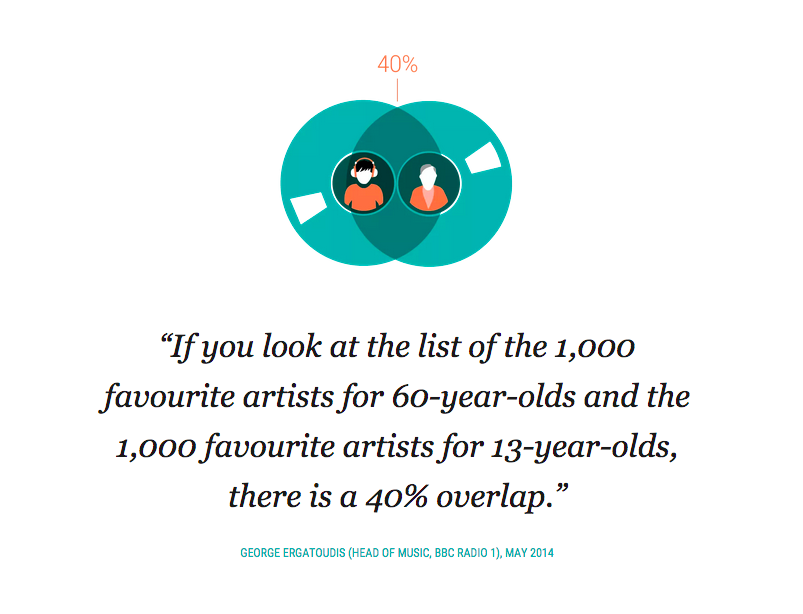
Age and social class are no longer a reliable way to predict to beliefs and buying habits. Identities and tastes are fluid. In truth they may always have been but now the anonymity/freedom of city life means now we feel more liberated to express who really are.People from conservative cultures like China and India hanker to live in a place where they can re-invent themselves- unconstrained by family expectations.(this describes several colleagues)

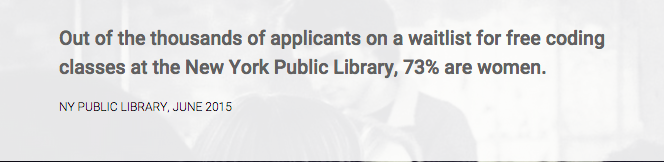
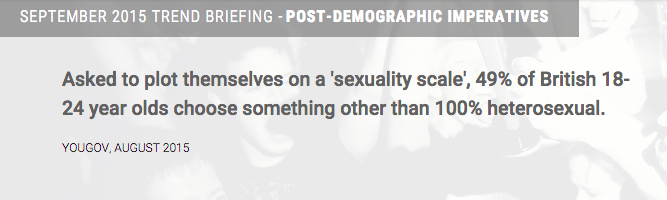
Below are some telling stats and quotes that illustrate that behaviour is now the only true measure of personal of taste- which of course plays right into the hands of the likes of Google that capture “signals of intent” in search data -rather than age and class.

(Full disclosure-I am a Google consultant)

Screen Shot 2015-09-02 at 15.47.12Screen Shot 2015-09-02 at 15.41.48Screen Shot 2015-09-02 at 15.42.02Screen Shot 2015-09-02 at 15.36.41Screen Shot 2015-09-02 at 15.36.27Screen Shot 2015-09-02 at 15.14.44

For brands:

For brands that want to be in touch with the zeitgeist it is open season for playing with identity – expect more transsexuals in ads and celebration of different life choices-divorcees, lesbian parents etc etc. But this will have its season and quite quickly look dated

Perhaps a better long term strategy is to make no assumptions at all about who your buyer will be – it is no accident that some of the most “in touch” brands are “everybody” brands like Uniqlo and Apple. They are not targeted at a demographic but rather they embrace and celebrate everyone from Grannies to hipsters and everything in between

Nine predictions:what the digital revolution will bring

Pundits say that anyone who claims to know what the digital revolution will bring is engaged in a confidence trick. My experience of publishing books and articles about digital futures suggests four things

-We can’t predict a decade ahead with any confidence

-A technology trend that is against the grain of human nature will most likely fail

-We do i think know what the shape of communications will be for the next three or four years.

-Futurology may be closer to fiction that sober analysis: but it will never go out of fashion as we can’t help wondering about the future

I have just published this slice of futurology in Market Leader. It contains five lessons learnt from my last attempt 10 years ago as well as nine predictions for the future. It is called The Surprise Generating Machine – a line stolen from Professor John Naughton.

Do add your predictions.

44-47 Julian Saunders 2nd proof

Some things were better in Don Draper’s day

Fans of Madmen may remember an episode when Don makes a client sign a creative brief – the idea being that the brief is a form of contract that a client makes with the agency.It made me nostalgic. This was common practice when i worked for Lintas and Ogilvy in the 80s – but now you rarely see this done

I wonder whether we should bring it back?
For a decade I have been running training courses for clients on “how to brief an agency” -but the common complaint from agencies is still that they either receive either no brief or an ill thought out document with a long wish list of objectives.

In other words no decisions have been made. Decision making (this, not that objective, this, not that audience) is the essence of good strategy.

For all the warm words that are said about “how important the brief is” the truth is that the brief is no longer a valued document because no commitment has been made. The result – wasted effort, costs, poor agency client relationships

Perhaps we should considering bringing back the practice of having a signed brief
Signing a contract – like the prospect of being hanged tomorrow as Dr Johnstone once said- concentrates the mind wonderfully.

Why brands decided to save the world


Last year The Cannes Awards saw many examples of brands trying to “do good business by doing good”. I expect this year there will again be many awards entries that aim to engender brand loyalty by being good corporate citizens. Aurora commissioned me to write a piece about this undoubtedly  big trend.

I have taken an historical perspective to explain why brands adopted “higher purpose branding” covering- 19th century philanthropy, challenger brand thinking courtesy of Adam Morgan and finally looking at the influence of big tech and social media. Brands covered include – The Body Shop, Dove, Google, Microsoft and Uber

A word doc is here which may be easier to read  HPB final


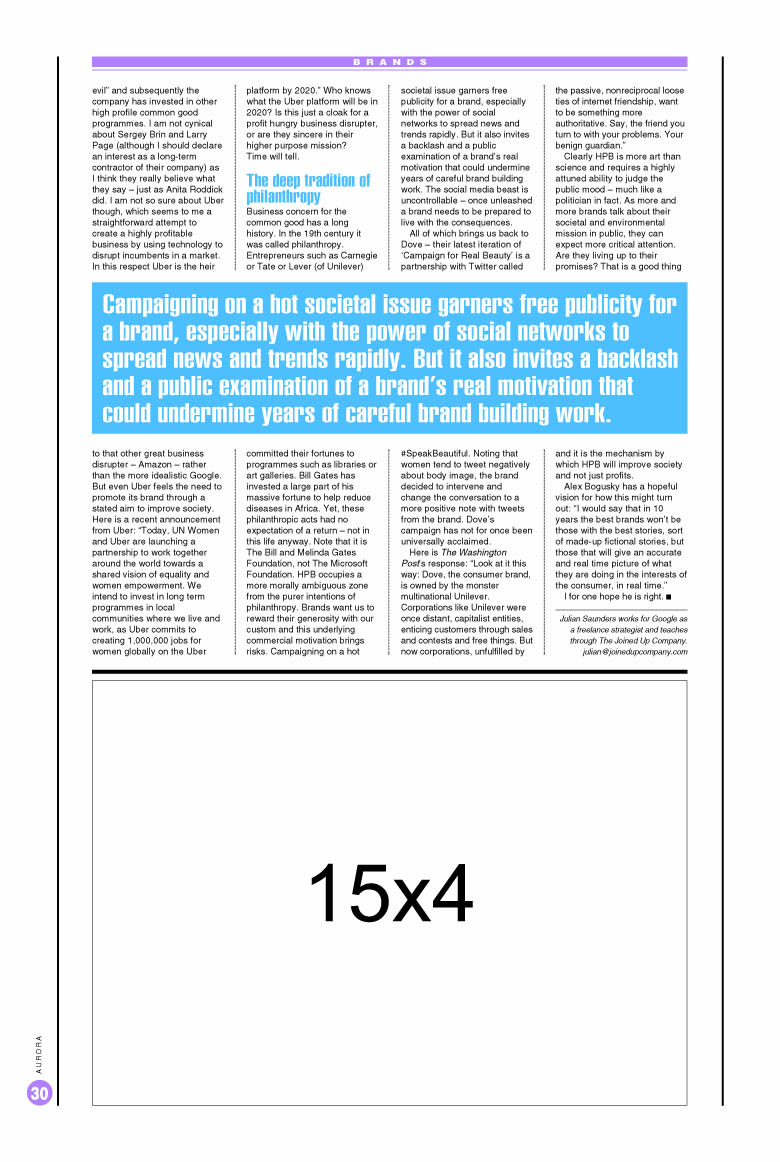
Page 29


Page 30

Spotted at DA&D judging week


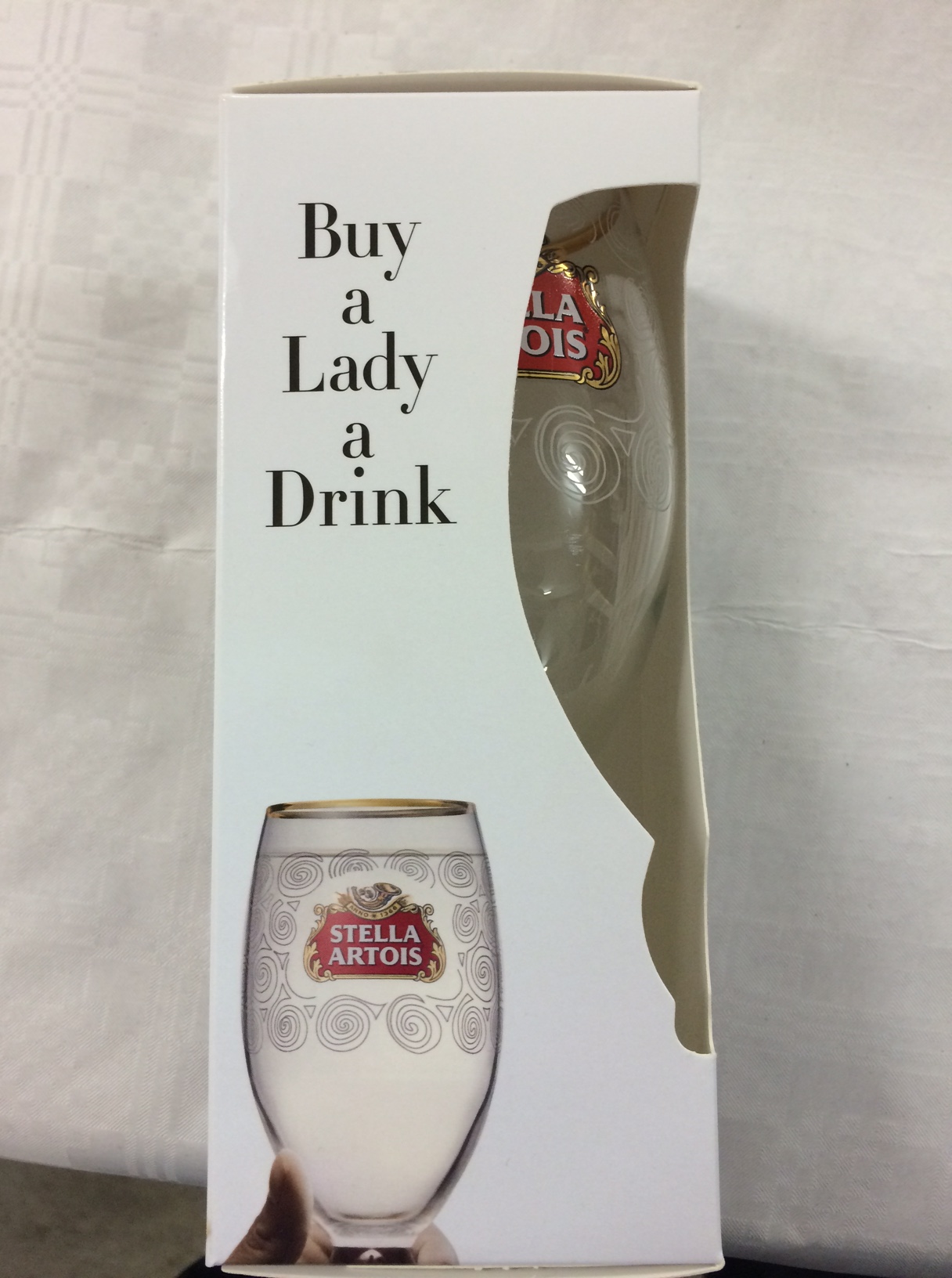
I was wandering around looking at the work at D&AD judging week when this one caught my eye. Even Stella Artois – known in certain circles as “wife beater” for bringing “rocket fuel” lager to the general public in the 90s- is getting in on public good branding.


IMG_4496

At first sight you think that the brand is getting in touch with its old-fashioned self with the line “Buy a Lady a drink”- Port and Lemon perhaps? Half of bitter Shandy ? A Babysham? But no in fact the brand is supporting clean drinking water in emerging economies…who would have thought it.IMG_4494


The old offers are the still best

I used to work on the Amex account at Ogilvy and during the 1980s Ogilvy and Amex invented many of the new rules of database and promotional marketing.

One of the perennial  winning offers was called Member Get Member– if you introduced five new members you got a case of wine. Wine was always the winning offer ( rather than whisky which also we tried out) because you could share the spoils with the friends you had introduced to membership.

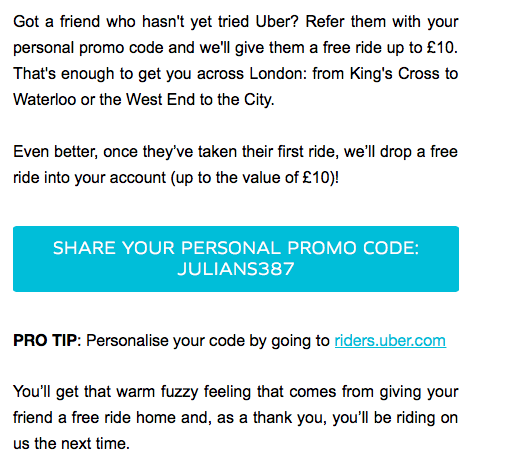
I see this basic idea come up all the time in different guises. This latest is from Uber- who have come up with a fresh spin on it

BTW- feel free to use my code and get a free taxi ride with Uber

Screen Shot 2015-03-25 at 11.47.38


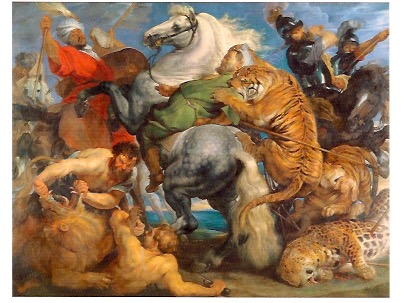
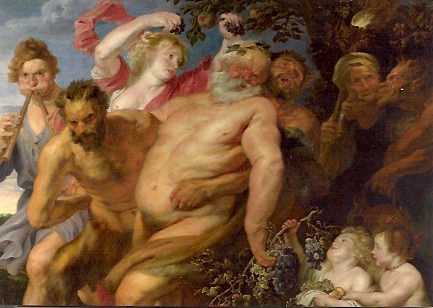
Lust, Violence, Drunkeness, Power, Fear

Got your attention ? I think that too explains why Rubens was so fabulously rich and successful in his lifetime. He pandered to most of the basic human drives in his lifetime. His paintings are the old master equivalent of watching one of Paul Greengrass’s Bourne identity films. All action. all of the time. Leaves you feeling slightly exhausted.Scan 2

Scan Scan 1

The thesis (supported by very a po-faced audio commentary) of the RA show is that Rubens influenced many many artists and so canvases by other are shown alongside to make this point. Well yes sometimes

But it was overstated and on occasions i thought that they were simply making a virtue of necessity- the RA did not really have enough great paintings by Rubens to go round. Rubens’ themes are explored by many other artists and so it is not so surprising that they reach for similar imagery.

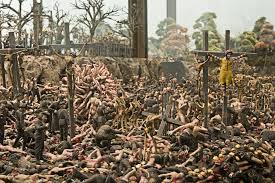
Rubens’ depiction (shown in a copy by another artist) of a mass of bodies tumbling into hell reminded me of Jake and Dinos Chapman’s vitrines – but they did not get a mention. So once you play the game of influences you can end up anywhere – who is to know.

Unknown


This presentation of old master art was so serious that i think it missed a simpler and larger point. Rubens’ was a great entertainer and he knew how to pander to the tastes of his patrons. He died rich. His art is second rate compared to Rembrandt – who didn’t pander to fashion and died poor.